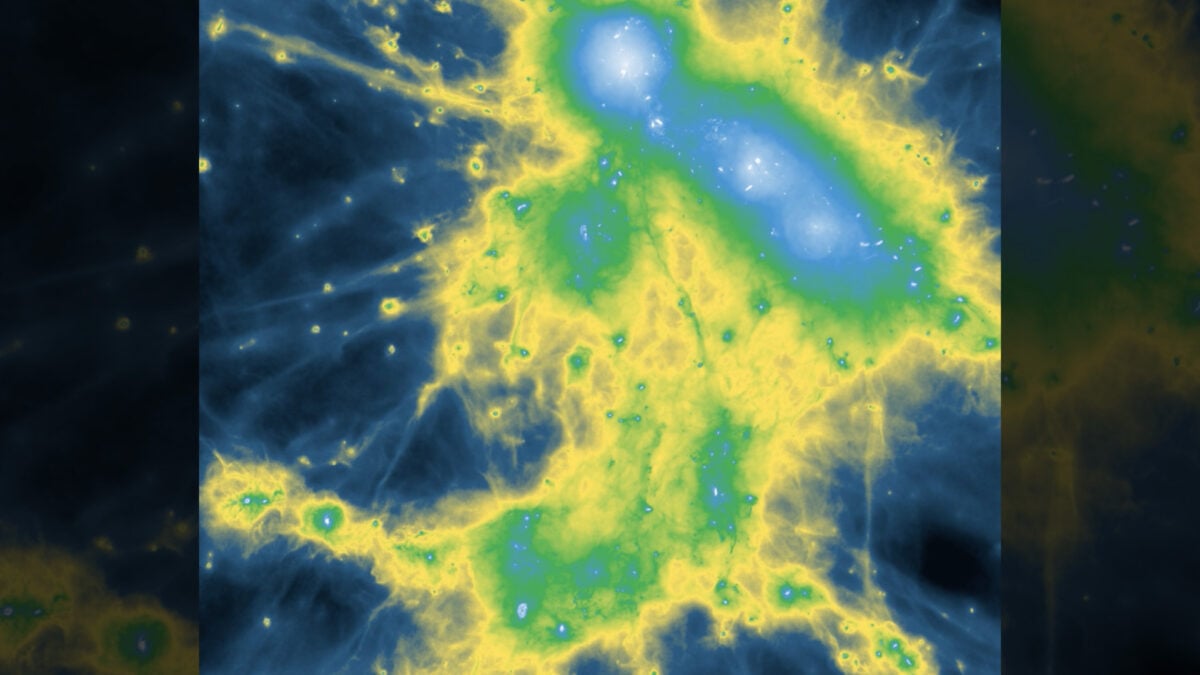
Scientists say they have finally tracked down a long-missing share of the universe’s ordinary matter, offering a possible answer to a problem that has challenged cosmology for decades. This is not dark matter, but the normal material that makes up stars, planets, gas, and people.
For years, researchers have known there was a mismatch between how much ordinary matter should exist and how much they could directly account for through observations. That gap left a significant portion of the universe’s visible, everyday matter unaccounted for, even though calculations suggested it had to be there.
The new finding appears to connect two scientific mysteries, helping researchers explain where that missing material has been hiding. By tying together separate lines of evidence, the work points to a clearer picture of how ordinary matter is distributed across the cosmos rather than concentrated only in the most obvious places.
If the result holds up, it would mark a major step in resolving one of astronomy’s most persistent questions about the makeup of the universe. It also strengthens scientists’ broader understanding of how matter is spread through space and how the large-scale structure of the cosmos evolved over time.





