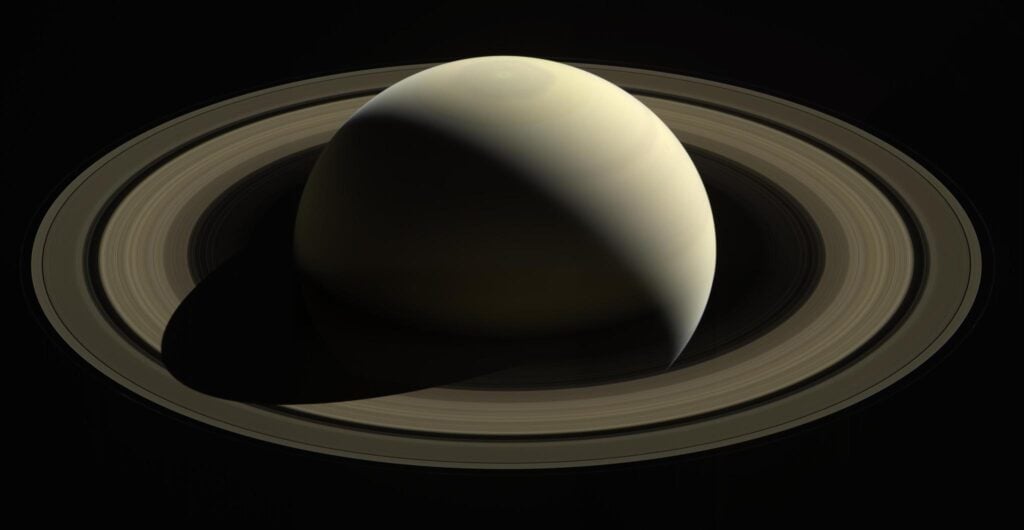
Astronomers dramatically expanded Saturn’s known satellite family in March 2025 by confirming 128 new moons in a single day. That pushed the planet’s total to 274, nearly doubling its previous count and giving Saturn more known moons than all the other planets in the solar system combined.
The announcement marks a major shift in what once seemed like a relatively stable tally. For years, Jupiter and Saturn traded the lead as observations improved, but the changes usually came gradually. This latest jump stands out because it happened all at once, turning Saturn into the clear leader by a wide margin.
The discovery also highlights how much the solar system can still surprise scientists. A sudden increase of this size suggests that the census of small worlds around giant planets is still incomplete, and that better observations can quickly change long-held assumptions. What looked settled at a human scale now appears far more dynamic.
Beyond the record itself, the new moon count is raising fresh questions about planetary formation and the history of Saturn’s surroundings. With so many newly confirmed objects orbiting the ringed planet, researchers now have more reason to revisit how such moon systems develop, evolve and remain hidden until technology catches up.