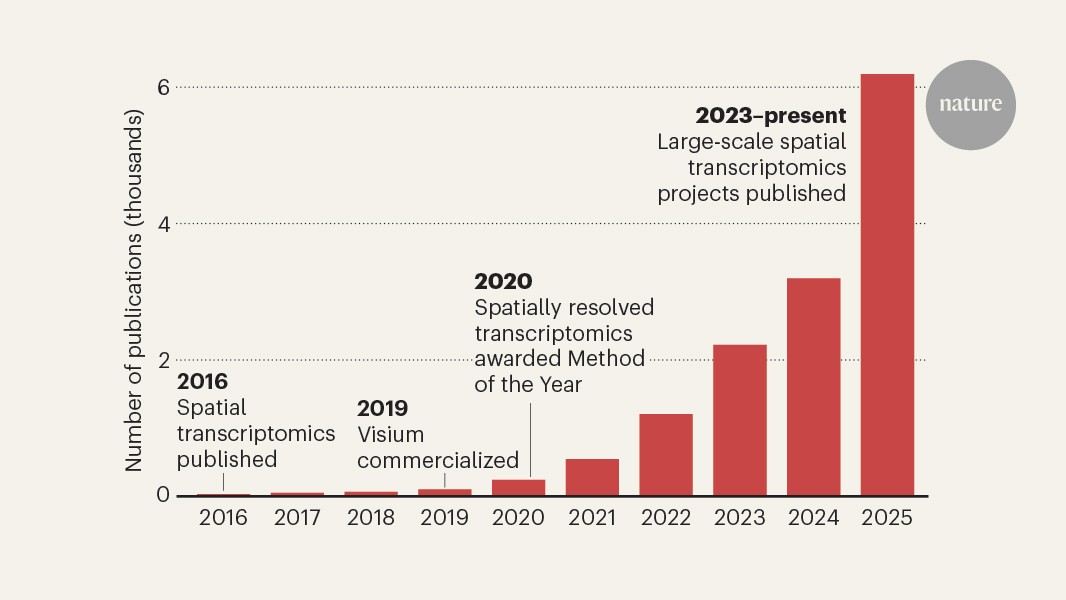
Spatial transcriptomics has reshaped biological research over the past decade by allowing scientists to see where gene activity happens inside tissues. Instead of measuring gene expression in bulk samples alone, these approaches add location data, giving researchers a clearer view of how cells behave within their natural surroundings.
The field has grown quickly since early landmark studies helped establish methods for mapping gene expression directly in tissue sections. Since then, spatially resolved transcriptomic technologies have expanded in precision, scale and usability, making them increasingly valuable for studying complex organs, developmental processes and disease patterns.
A key theme in this progress is the close exchange between academic laboratories and industry. Research groups drive new concepts and experimental methods, while commercial development helps turn those advances into broader platforms and tools. That feedback loop has accelerated adoption and pushed the technology toward more practical and widely accessible applications.
The result is a stronger framework for understanding how tissues are organized and how disease emerges at the cellular level. As spatial transcriptomics continues to mature, it is deepening insight into both normal biology and pathology, reinforcing its role as an important area of modern genomics research.





