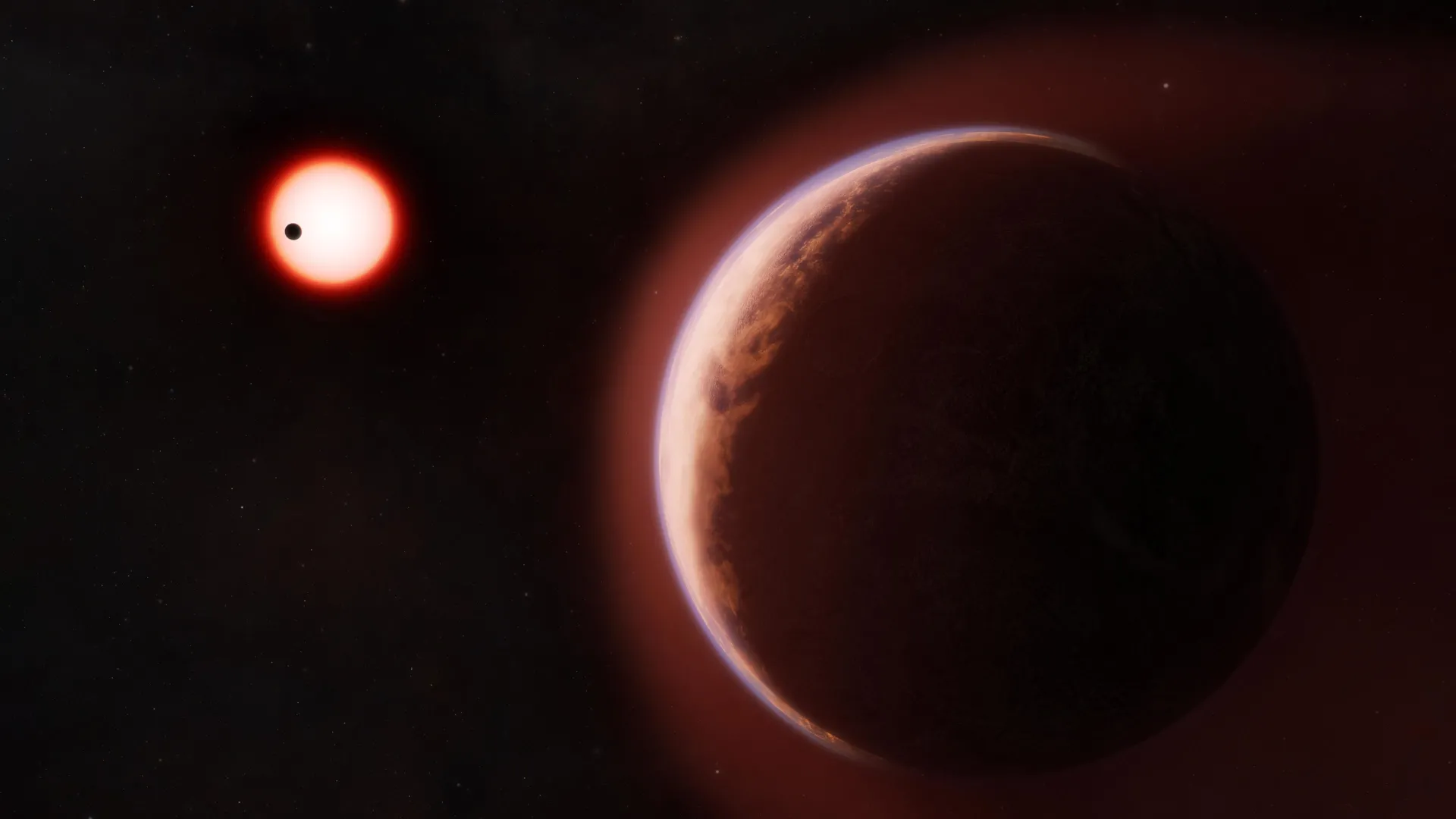
Astronomers have identified what appears to be the first confirmed atmosphere surrounding a rocky planet in the habitable zone of another star. The planet, known as LHS 1140 b, is about 48 light-years from Earth and is considered one of the most intriguing worlds yet found beyond our solar system.
Researchers detected the atmosphere by observing helium escaping from the planet into space. That signal gave scientists a way to confirm that gas still surrounds the world, an important breakthrough because rocky planets are much harder to study than larger gas giants.
The finding is especially significant because LHS 1140 b lies in its star’s habitable zone, the region where temperatures can allow liquid water under the right conditions. An atmosphere is one of the key factors that can help regulate surface conditions, making this kind of discovery central to efforts to understand whether distant rocky planets could support life-friendly environments.
While the detection does not mean the planet is inhabited, it strengthens the case that some rocky worlds around other stars can hold on to substantial atmospheres. For astronomers searching for potentially life-supporting planets, LHS 1140 b now stands out as a major target for future observation.