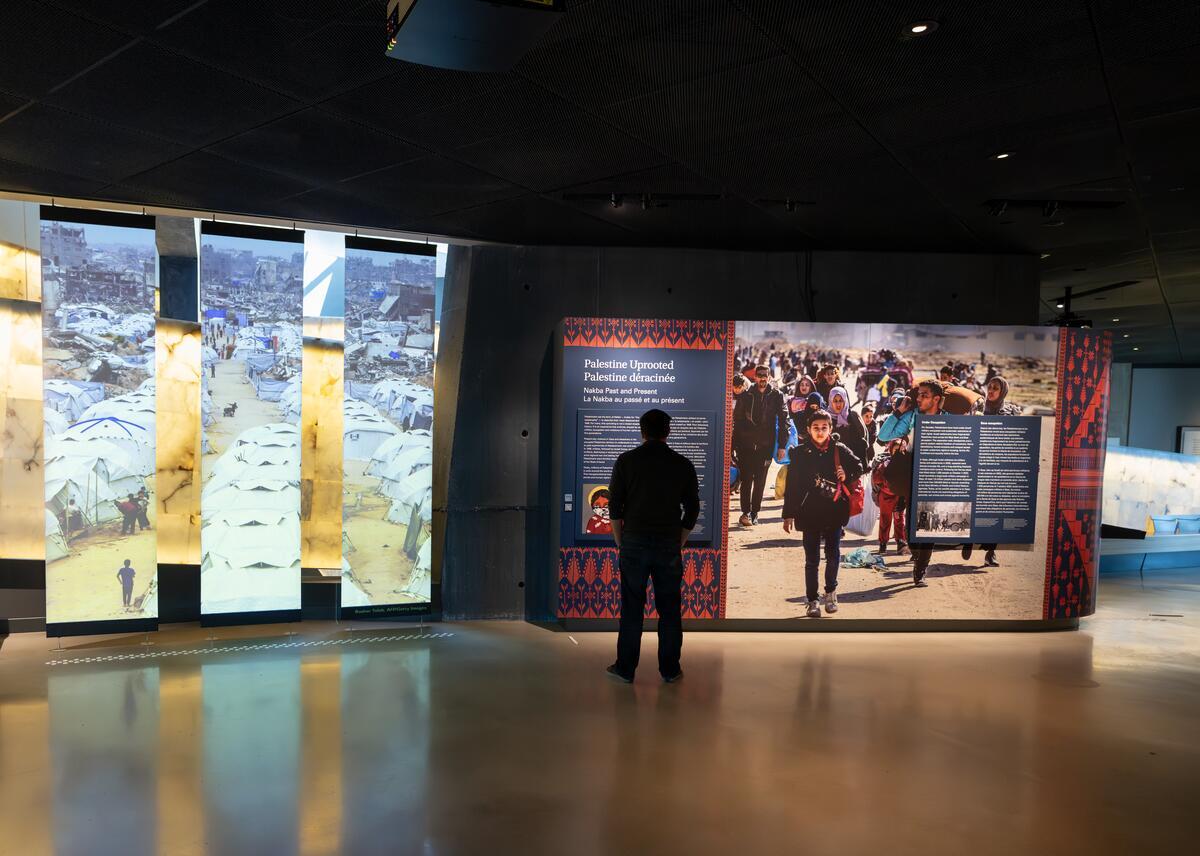
An exhibit at Canada’s human rights museum is drawing attention for confronting widely repeated narratives about the founding of Israel. The display centers experiences that are often left out of mainstream public history, including the perspectives of Palestinian Canadians and the ways those memories have been carried across generations.
The report says pro-Israel advocacy groups had pressured the museum for years not to present these stories. That history of outside pressure has made the exhibit especially notable, as it signals a willingness to address a politically sensitive subject inside a major public institution focused on human rights and historical memory.
At the heart of the coverage is the idea that museums help shape how national and international histories are understood. By making space for Palestinian accounts, the exhibit appears to challenge simplified versions of Israel’s creation and to broaden the conversation around displacement, identity and contested historical narratives.
The controversy around the exhibition also reflects a larger debate in Canada and beyond over whose stories are preserved, validated and publicly recognized. In that sense, the museum’s decision is not only about one exhibit, but about how institutions present difficult histories that remain deeply relevant today.