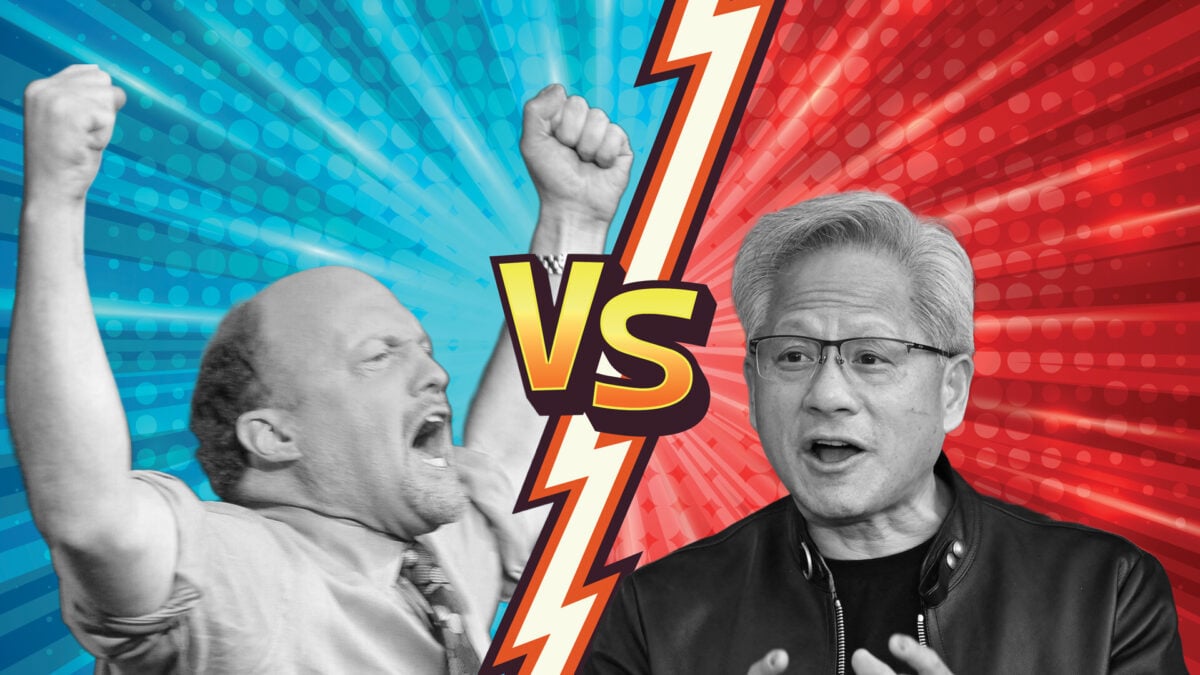
A powerful open-source AI model from China has reopened a familiar argument in the tech world: should advanced AI be broadly accessible, or should it be more tightly controlled? The latest release has pushed that debate back into the spotlight, splitting industry voices between those who see openness as a driver of progress and those who view it as a strategic risk.
That divide is being illustrated through two very different public figures: Nvidia CEO Jensen Huang and market commentator Jim Cramer. The article frames them as symbols of competing visions for AI’s future, with one side leaning toward wider adoption and ecosystem growth, while the other reflects a more defensive view shaped by competition, market pressure, and concerns about who benefits from open access.
The timing matters. As Chinese AI developers gain attention with open-source releases, the conversation is no longer just about software philosophy. It also touches on geopolitics, chip demand, national competitiveness, and whether U.S. tech leadership is strengthened or weakened when powerful AI tools spread quickly across borders.
For investors, companies, and policymakers, the bigger issue is what kind of AI market emerges next. If open models keep improving, they could speed up innovation and lower barriers to entry. But they could also challenge the business models and strategic assumptions behind more closed, tightly controlled AI systems. That tension is why the latest AI launch has sparked such a sharp reaction across the industry.