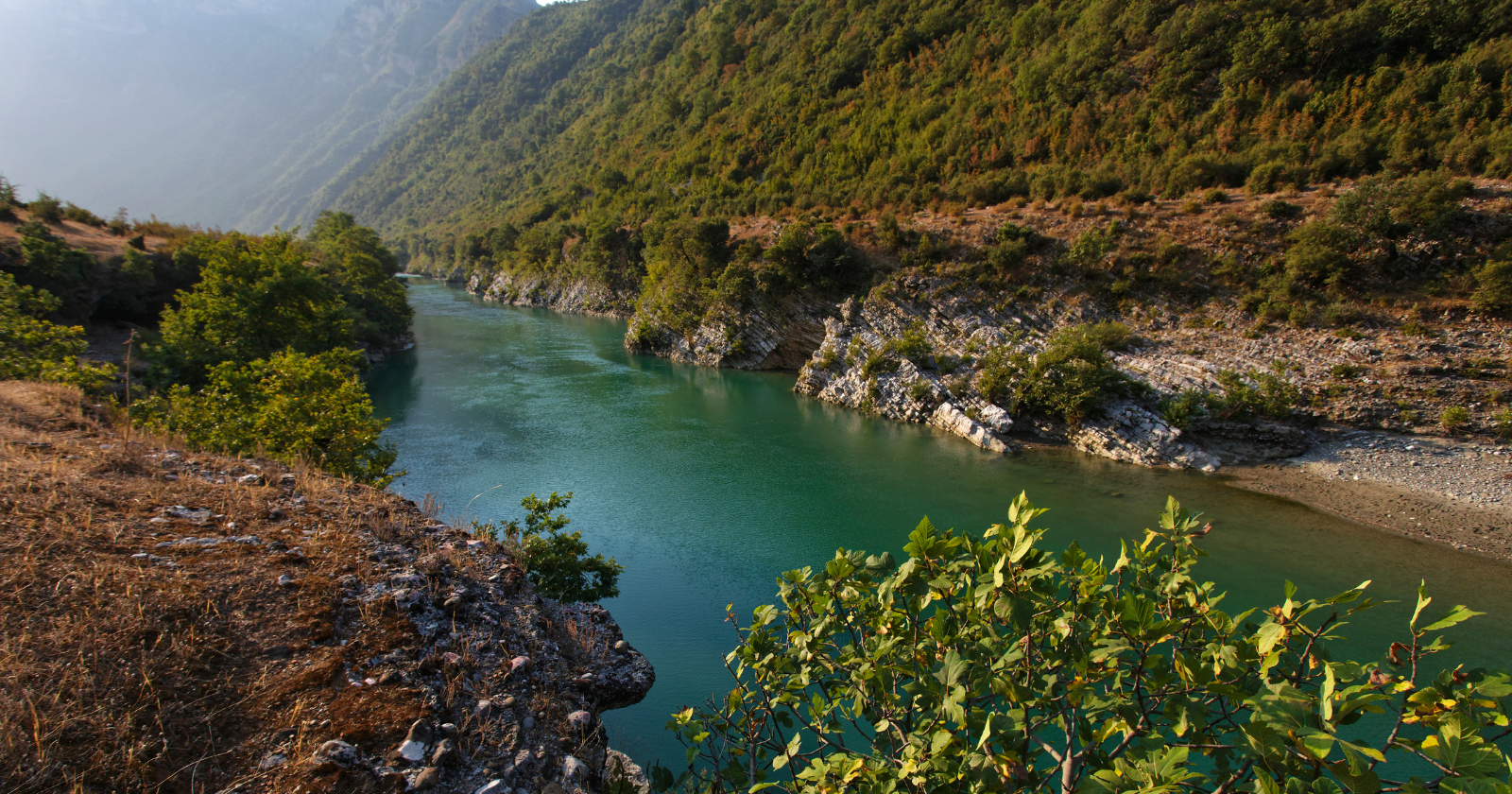
One stretch of river in Albania has become a symbol of what remains of Europe’s natural waterways. While most major rivers across the continent have been reshaped by dams, diversions, canal building, and other engineering projects, this river is described as one of the last to continue flowing largely on its own terms.
Its survival matters because so many European rivers have long been redirected to serve transport, power generation, flood control, and agriculture. Over time, those changes have transformed river habitats and reduced the number of large, free-flowing waterways. Against that backdrop, Albania’s untamed river stands out as an increasingly rare example of a more natural river system.
That status has also turned it into a flashpoint. The debate around the river reflects a broader struggle between economic development and environmental protection. Supporters of infrastructure and energy projects see rivers as resources to be managed, while conservation advocates argue that once a wild river is altered, the ecological damage can be difficult or impossible to reverse.
The story of this Albanian waterway highlights a wider European question: how much of the natural world should remain beyond human control. As pressure grows on land, water, and energy systems, the future of one of Europe’s last wild rivers has come to represent a larger fight over biodiversity, landscape protection, and the value of leaving some places untouched.