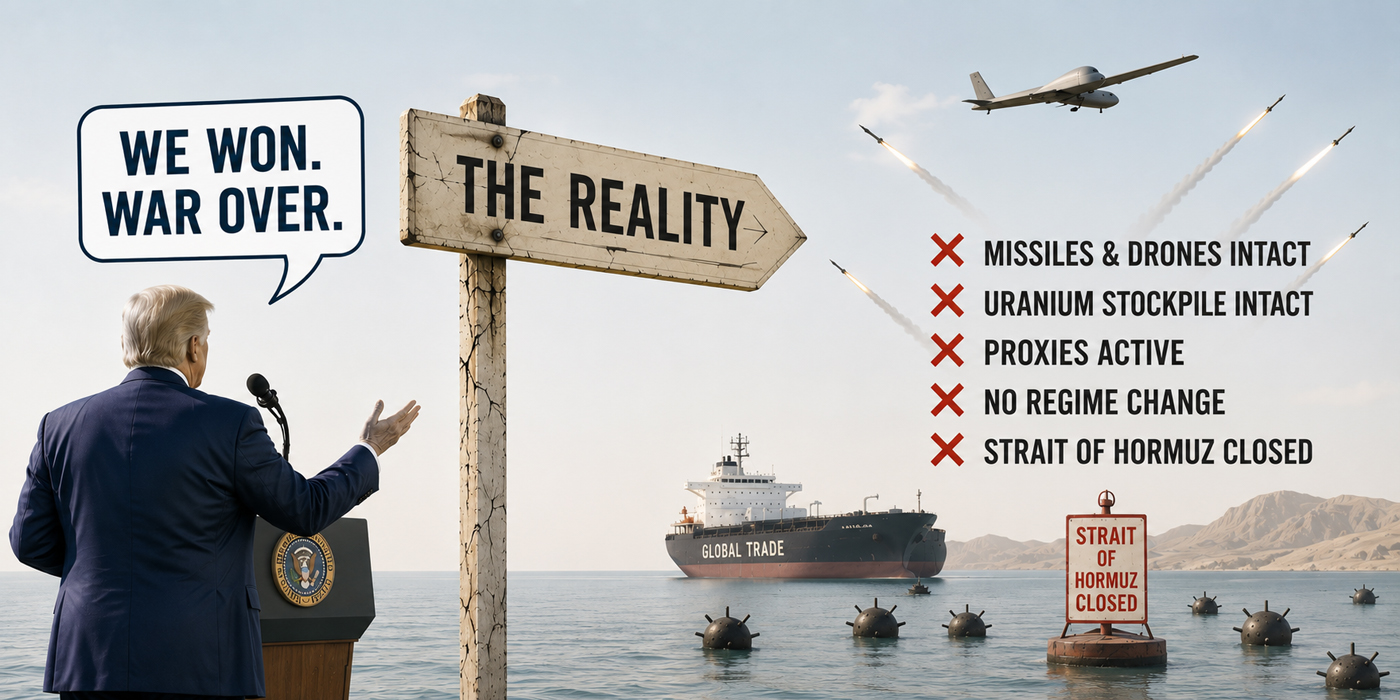
A new analysis argues that one of the most important assumptions behind the Iran war has been largely lost in the rush of daily headlines: the conflict was expected to be brief. According to the piece, when the United States and Israel formally began their military campaign on February 28, 2026, officials did not appear to be planning for a long and open-ended fight.
The article suggests that public understanding of the war has shifted as events continued to unfold. In its telling, the fast-moving news cycle helped bury the original expectation of a quick outcome, leaving many people with a different impression of what the campaign was supposed to achieve and how long it was supposed to last.
Rather than treating the war’s duration as inevitable, the commentary focuses on the gap between the administration’s apparent early expectations and the reality that followed. That contrast, it argues, matters because it shapes how the public judges both the strategy and the political case that was made at the start.
The piece ultimately revisits the opening phase of the conflict to question how quickly assumptions about success can harden into accepted history. Its core point is that remembering the war’s original timetable is essential to understanding the debate over whether the campaign met its stated aims or instead became something much larger than first intended.