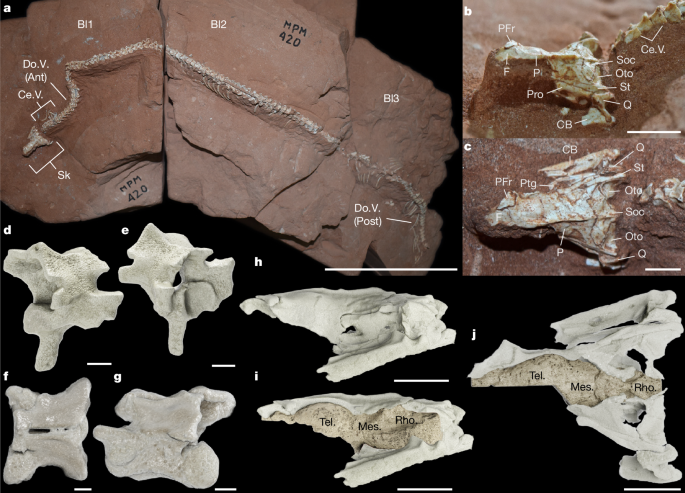
A newly reported fossil snake from Brazil is giving researchers a sharper view of how early snakes evolved. Dating to the Late Cretaceous, the specimen is described as unusually well preserved, allowing scientists to examine features that are rarely available in such ancient remains.
The study points to an important conclusion: the earliest snakes may already have been far more diverse than once thought. That diversity appears to include both ecology, or how different snakes lived in their environments, and brain shape, suggesting that major evolutionary experimentation was underway early in the group’s history.
Because fossils of ancient snakes are often incomplete, each high-quality specimen can reshape ideas about their origins. In this case, the Brazilian find adds weight to the view that early snake evolution was not a simple, uniform process. Instead, different forms may have been adapting to distinct habitats and ways of life while also showing meaningful anatomical variation.
The research adds to the broader fossil record used to trace the origin and early evolutionary history of snakes. By combining evidence from morphology and exceptionally preserved remains, scientists are building a more detailed picture of how this animal group diversified long before modern snakes appeared.





