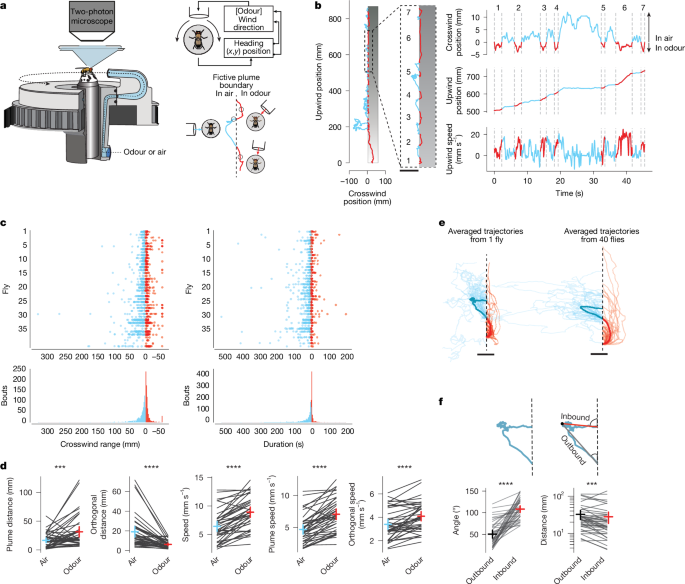
New research highlighted by Nature points to a vector-based strategy that helps fruit flies navigate toward smells. Using a virtual reality system, the experiments suggest that Drosophila do more than simply react to odor in the moment. Instead, they appear to rely on memory-related processing to stay oriented as they move through a changing sensory environment.
The study centers on how flies behave at the boundary of an odor plume, where the signal can be intermittent and difficult to follow. According to the description, the insects track along the plume’s edge rather than moving randomly through it. That boundary-following behavior may help them preserve directional information and improve their chances of reaching the source of a smell.
A key takeaway is that olfactory navigation may involve stored information about recent sensory experience, not just immediate odor detection. In this view, the fly combines present cues with a short-term internal record of where the odor was encountered, allowing it to update movement in a more organized way. The virtual reality approach gives researchers a controlled way to test how these decisions unfold.
The findings add to broader neuroscience work on how small brains solve complex navigation problems. By showing that fruit flies may use a memory-based strategy to move along odor plume boundaries, the research offers a clearer picture of how animals locate food, mates, or other important targets through smell.