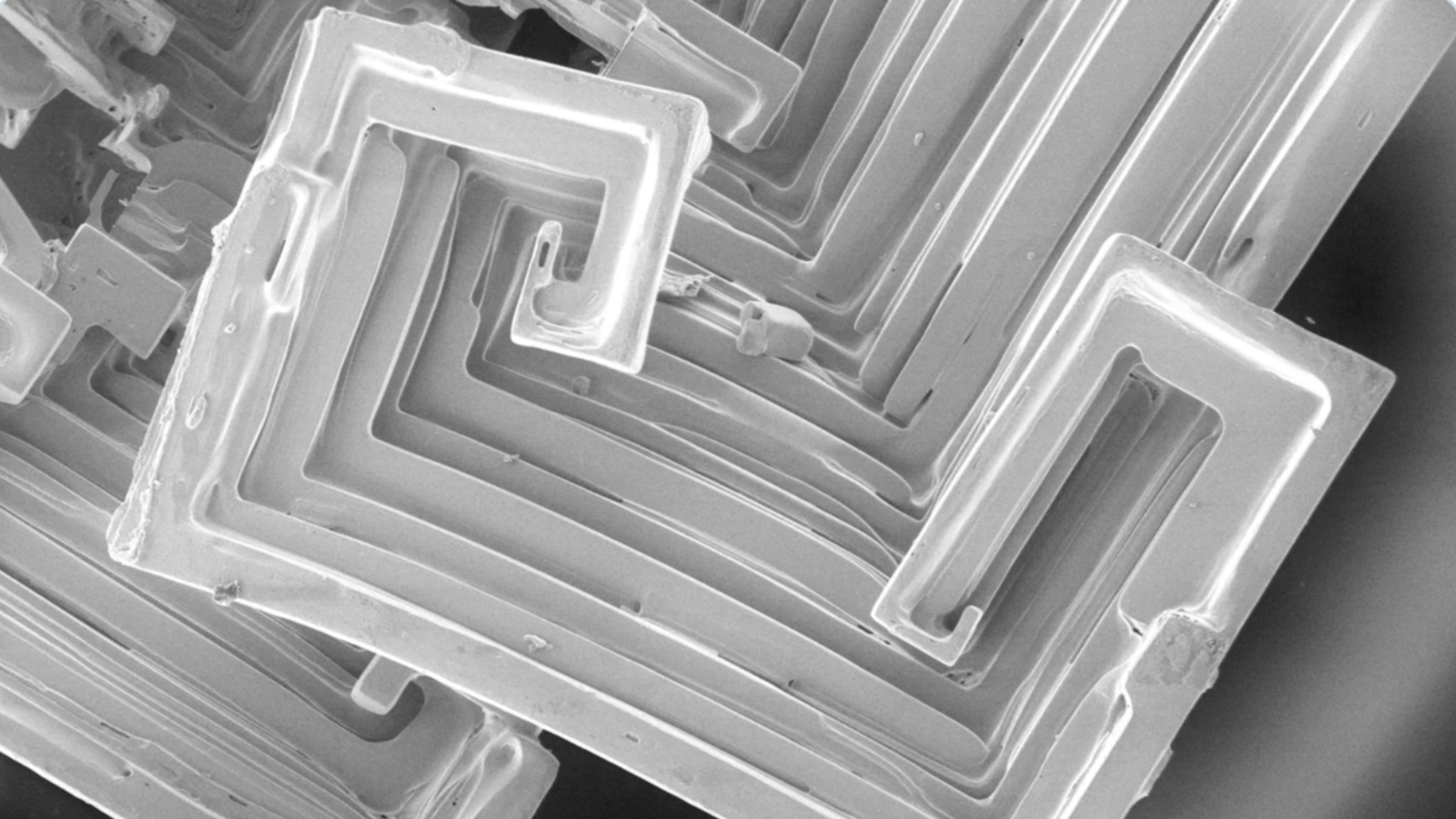
A NASA astronaut has shared an image of a striking crystal grown aboard the International Space Station, where researchers observed an unusual scroll-like form sometimes described as a hopper crystal. The eye-catching shape stands out because it looks unlike the kinds of crystal growth people usually expect to see on Earth.
The result points to a basic but important idea in space science: ordinary salts can behave very differently when gravity is no longer the dominant force shaping how they form. In orbit, the conditions around a growing crystal change, and that can produce structures with surprising geometry.
On Earth, gravity influences how liquids move and how dissolved material settles and circulates during crystal formation. In microgravity, those familiar effects are greatly reduced, giving scientists a clearer view of how crystals develop when gravity-driven motion is not directing the process. That helps explain why a simple salt can take on an almost impossible-looking appearance in space.
Findings like this are valuable because crystal growth is tied to broader questions in chemistry, materials science and space research. By studying how common substances assemble on the ISS, scientists can better understand the role gravity plays in shaping matter and why some forms emerge only in orbit.