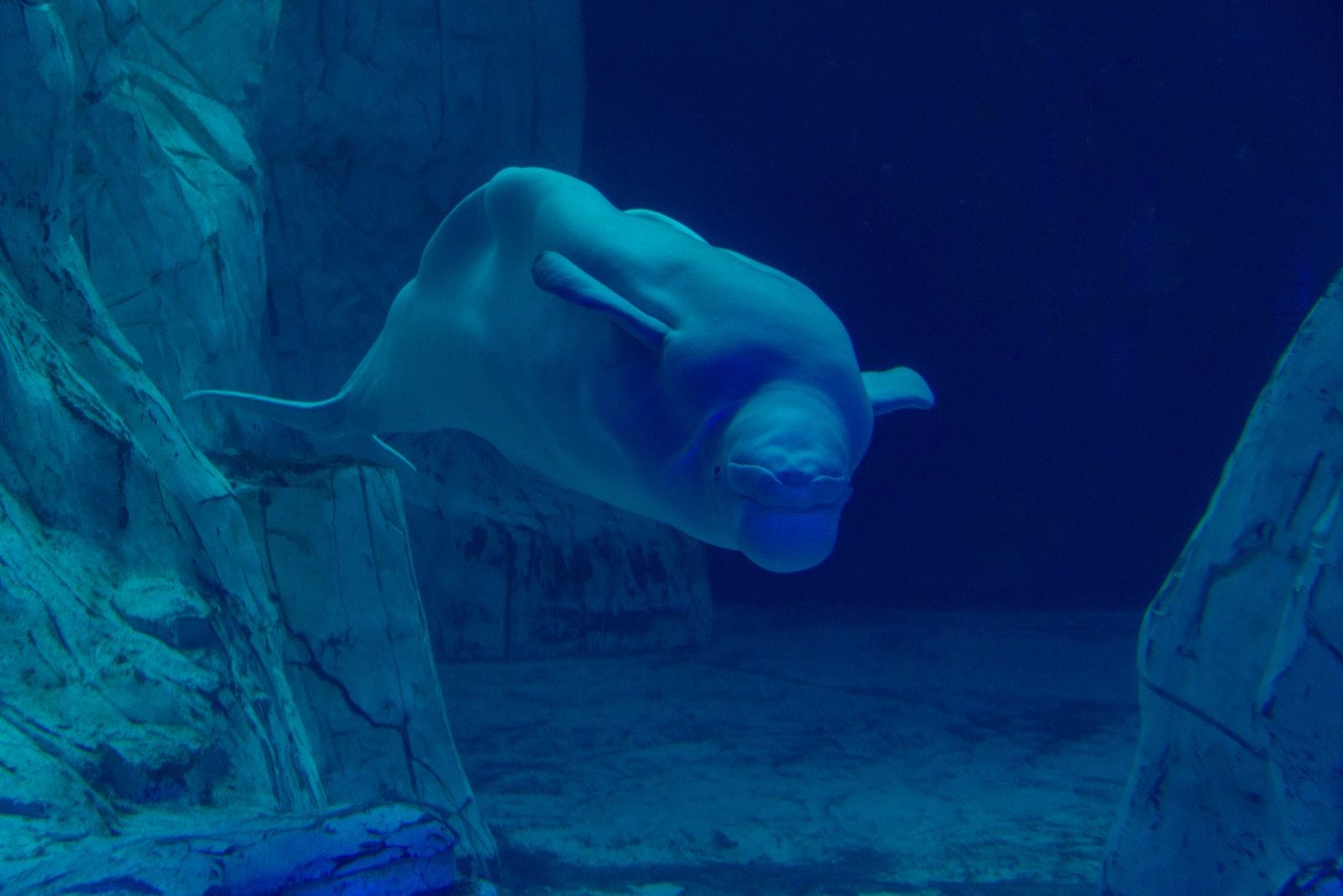
Beluga whales are built for extreme winter dives beneath Arctic pack ice. Off western Greenland, a beluga can descend to around 700 metres, remain underwater for about 25 minutes, and then return to the surface through a narrow opening in the ice. That ability allows the species to move and forage in an environment where breathing holes may be scarce and the water below is cold and dark.
A key part of this survival strategy is how the whale handles pressure. On a deep dive, its lungs compress dramatically, shrinking to a tiny fraction of their surface volume. Rather than relying on full lungs at depth, the animal uses oxygen stored elsewhere in the body, helping it stay submerged far longer than most air-breathing mammals could manage.
Its muscles are especially important. Belugas carry large oxygen reserves in muscle tissue, which is so rich in oxygen-binding compounds that it can appear almost black when cut. That internal supply supports swimming and hunting during long descents and extended periods under ice, where surfacing opportunities may be limited.
The physiology highlights how a highly vocal whale has adapted to life in one of the planet's harshest marine habitats. Deep diving, breath-holding, and efficient oxygen storage give belugas the tools to navigate near-total darkness below the Arctic ice while still depending on a single breath from the surface.