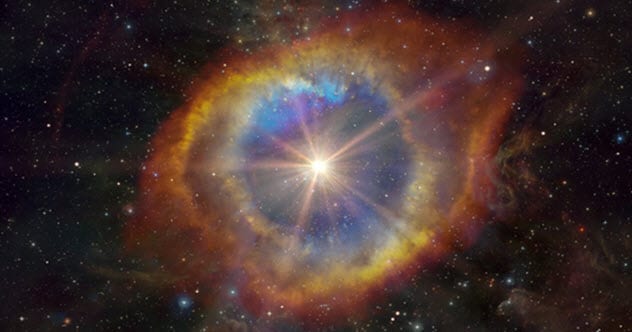
A new science-focused roundup revisits some of the biggest cosmic conundrums by starting with a major turning point in astronomy. About a century ago, many researchers believed the Milky Way made up the entire universe. That view changed as better observations and new methods revealed that the faint nebulae seen in the night sky were far more distant than once thought.
The summary highlights the importance of Henrietta Swan Leavitt's work on Cepheid variable stars, which helped astronomers measure vast distances in space. Edwin Hubble then used those insights to show that the mysterious nebulae were actually galaxies beyond the Milky Way, dramatically expanding humanity's picture of the universe.
Framed as a list of amazing explanations for cosmic mysteries, the piece points to how scientific understanding grows through observation, measurement and reinterpretation. What once looked like a complete map of the cosmos turned out to be only a small part of a much larger universe.
The article's appeal lies in connecting historic discoveries with enduring questions about space, galaxies and the structure of the cosmos. It reflects how astronomy continues to revisit old assumptions while searching for clearer answers to the universe's most puzzling problems.





