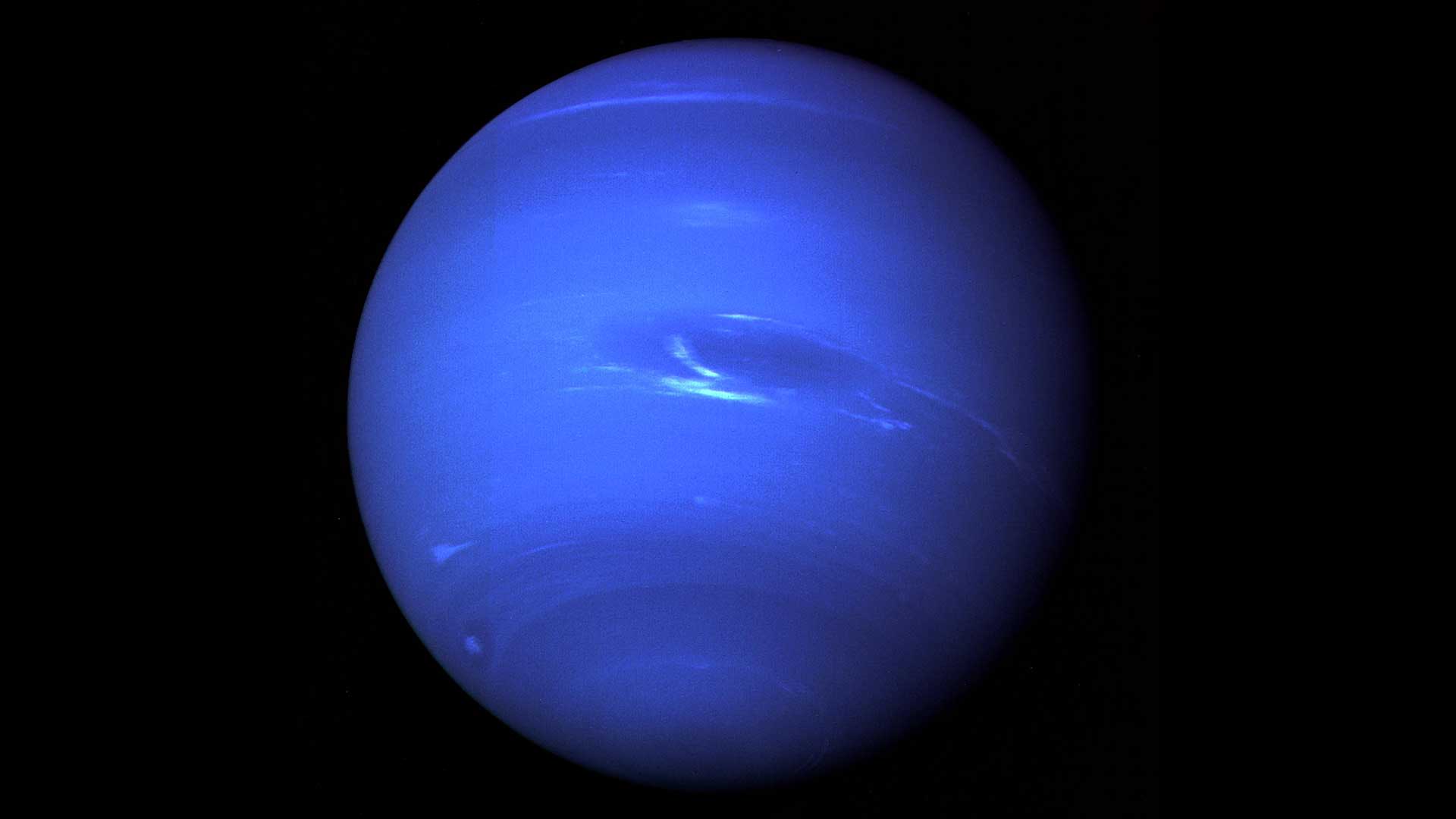
Neptune is one of the most puzzling weather worlds in the solar system. Orbiting about 4.5 billion kilometres from the Sun, the planet receives only a faint fraction of the sunlight that reaches Earth. At midday, conditions there are closer to a dim twilight, with sunlight roughly 900 times weaker than what we experience here.
Even so, Neptune’s atmosphere is anything but calm. Bright methane-ice clouds can be seen moving through a dynamic sky, and the planet generates the fastest winds known anywhere in the solar system. According to the description, those winds can reach speeds about twice as strong as Earth’s most violent hurricanes.
That makes Neptune a major scientific mystery. A world so far from the Sun might be expected to have a sluggish atmosphere, but Neptune radiates more heat than it receives. That extra energy is a key clue, suggesting that the planet’s own internal heat plays an important role in driving its extreme weather.
The result is an ice giant where weak sunshine does not mean weak storms. Neptune shows that planetary weather is shaped by more than just solar energy, and its powerful winds continue to challenge scientists trying to explain how atmospheres behave on distant worlds.





