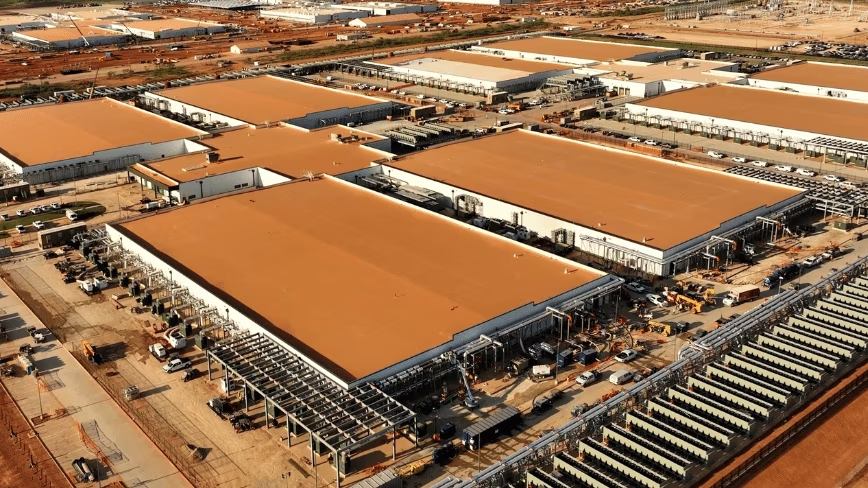
OpenAI is planning a major new data centre project in Georgia, with the reported investment valued at $30 billion. But the scale of the build is only part of the story. The project is also being framed around a broader effort to win over local communities, reflecting how large technology developments now face far more public attention than they once did.
Data centres were often treated as low-profile infrastructure projects in the past, with most of the focus on land, power and construction. That has changed as AI demand has accelerated and the facilities behind it have become larger, more visible and more resource-intensive. For companies expanding quickly, the challenge is no longer just building the site itself, but also managing local concerns around what such a development means for nearby residents.
OpenAI’s reported approach suggests the industry is adapting to that new reality. A major AI facility can bring investment and signal long-term growth, but it can also raise questions about energy use, land development and how much benefit the surrounding area will see. That helps explain why outreach and reputation-building are becoming part of the rollout for projects that might previously have been handled more quietly.
The Georgia plan highlights a wider shift in the AI economy: the race to build computing capacity is now tied as much to public acceptance as to engineering and capital. As companies push ahead with ever-larger infrastructure, the success of these projects may depend not only on the concrete and servers, but on whether neighbours are convinced to accept them.