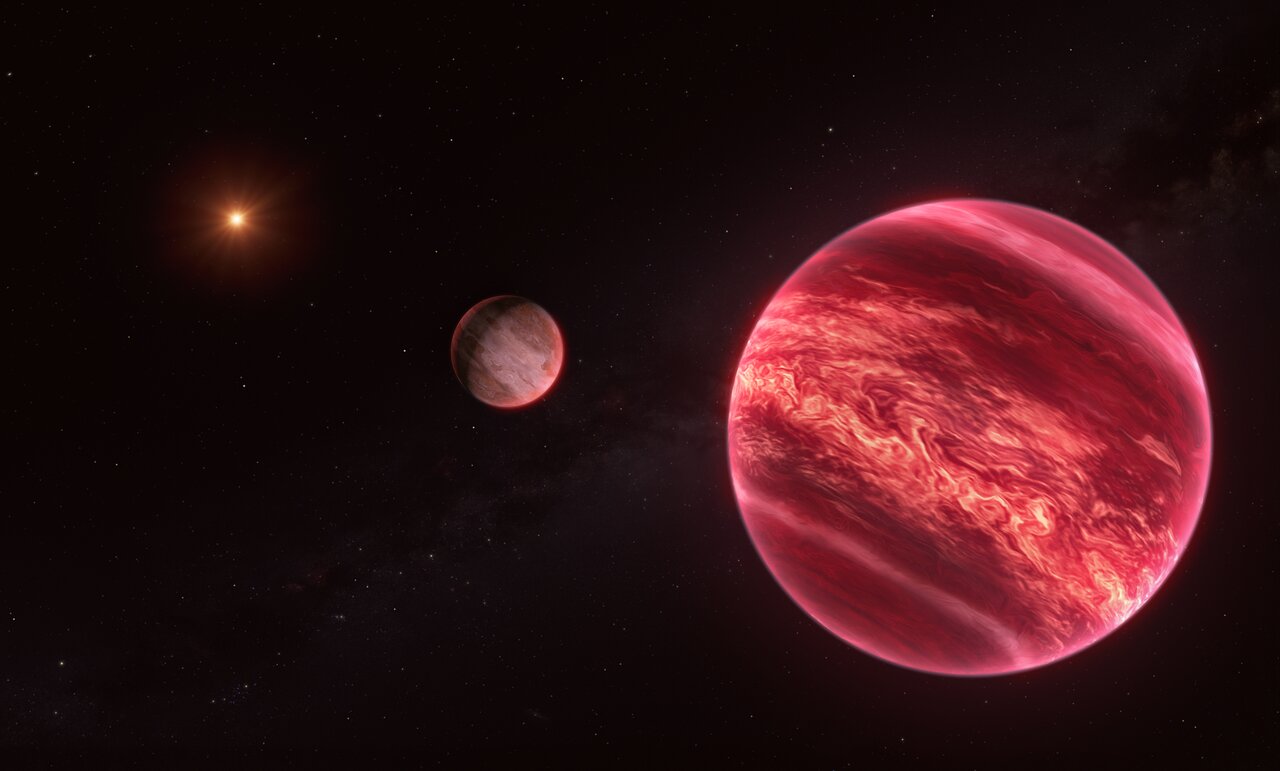
Astronomers say they may have uncovered evidence of what could become the first known exomoon, based on observations of the CD-35 2722 system. The findings come from the European Southern Observatory’s Very Large Telescope, adding fresh momentum to the long-running search for moons beyond our Solar System.
What makes the object especially unusual is that it does not appear to orbit a planet in the same way moons in our own cosmic neighborhood do. Instead, researchers describe it as a moon-like body, a detail that could complicate how scientists define and classify exomoons.
The discovery points to a system that may not fit neatly into existing categories of planets, moons, and smaller companions. If the evidence holds up, it could push astronomers to rethink how such objects form and how they evolve around stars and other bodies.
For now, the result is best viewed as a strong candidate rather than a final confirmation. More observations and analysis will be needed, but the detection already highlights how advanced telescopes like ESO’s VLT are revealing increasingly strange and important features in planetary systems beyond our own.





