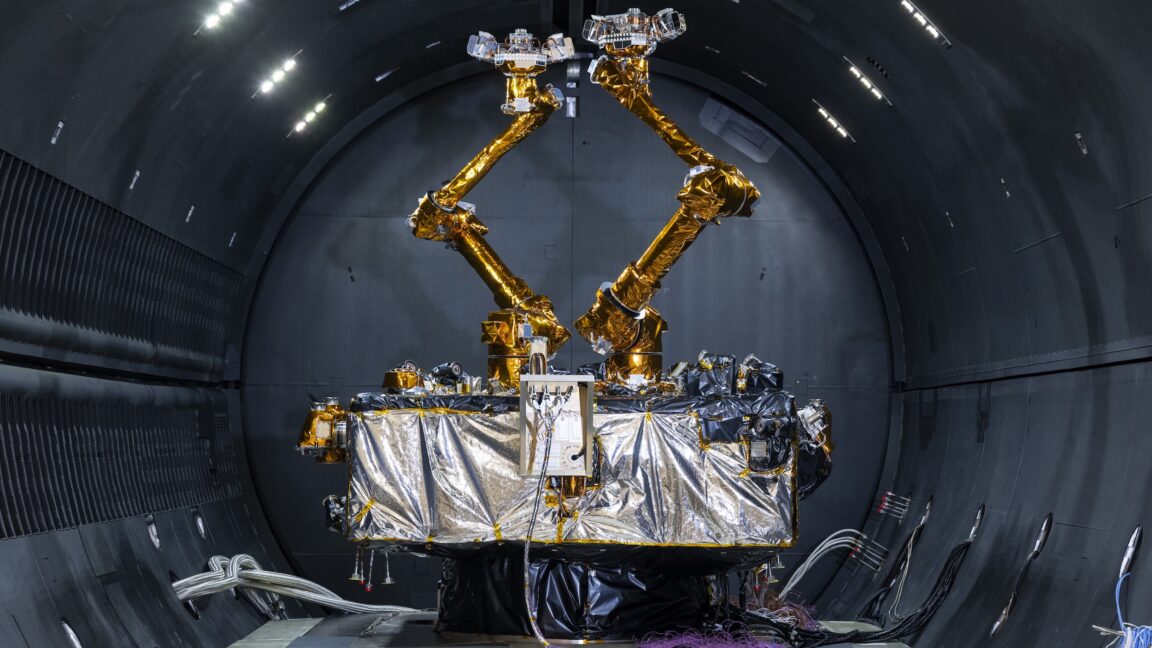
A report from Ars Technica highlights what it describes as the world’s most advanced robotic servicing satellite, with the careful caveat that this is only what is publicly known. The focus is on a spacecraft built to carry out complex jobs around other satellites, a field that has long been discussed but remains extremely challenging in practice.
Robotic servicing in orbit can involve tasks such as approaching another spacecraft, inspecting it, adjusting its position, or supporting repairs and upgrades. Those operations sound straightforward in theory, but space makes every step harder. A servicing vehicle must work with extreme precision while dealing with distance, motion, and the risks of any close encounter between satellites.
That difficulty appears to be a central point of the story. As the description notes, these are the kinds of things that “tend to be really hard,” which helps explain why truly advanced servicing satellites remain rare and technically significant. Even modest progress in this area can matter because it could eventually extend the life of expensive spacecraft and reduce the need for immediate replacements.
The article’s framing also suggests a broader reality in the space sector: some of the most capable systems may not be fully disclosed. Publicly known robotic servicing satellites are already pushing the limits of autonomous operations in space, and any platform labeled the most advanced in that category signals how quickly satellite servicing technology is evolving.