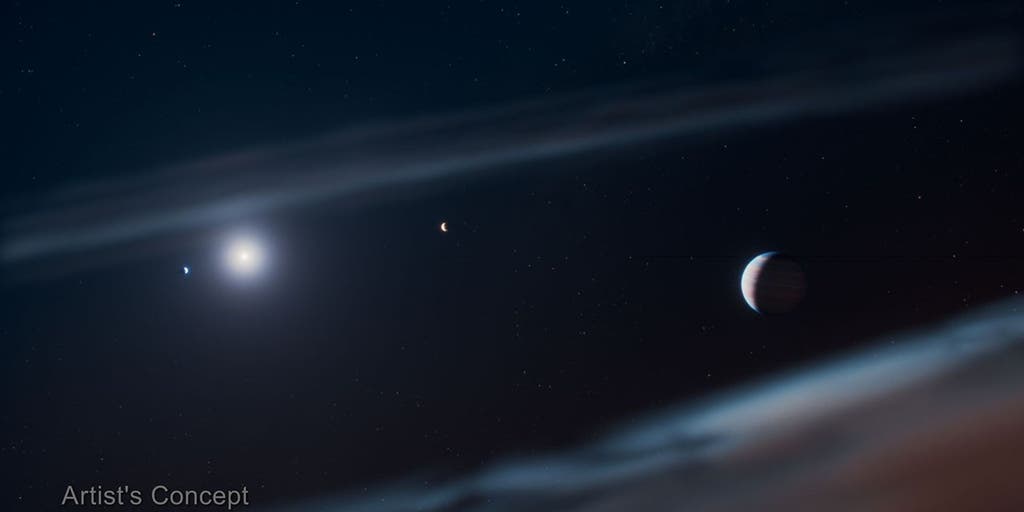
Astronomers using NASA's James Webb Space Telescope have identified a giant exoplanet inside one of the most closely examined planetary systems in the Milky Way. The discovery stands out because the planet had gone unnoticed despite years of observations, suggesting it was effectively concealed within a system scientists thought they understood well.
What makes the finding especially important is the technique behind it. Researchers say the planet was revealed through a new method that could expand the search for worlds beyond our solar system, especially in places where traditional approaches may have missed them. That means some planetary systems already on astronomers' radar could still hold hidden planets.
The result highlights Webb's growing role in exoplanet science. Beyond studying distant galaxies and the early universe, the telescope is also helping researchers refine how they detect and analyze planets orbiting other stars. A discovery in such a heavily studied system suggests there may be more surprises waiting in data from familiar targets.
For astronomers, the hidden giant planet is more than a single new world. It is also proof that improved tools and fresh methods can change the picture of even well-known cosmic neighborhoods, opening the door to finding many more elusive planets in the years ahead.





