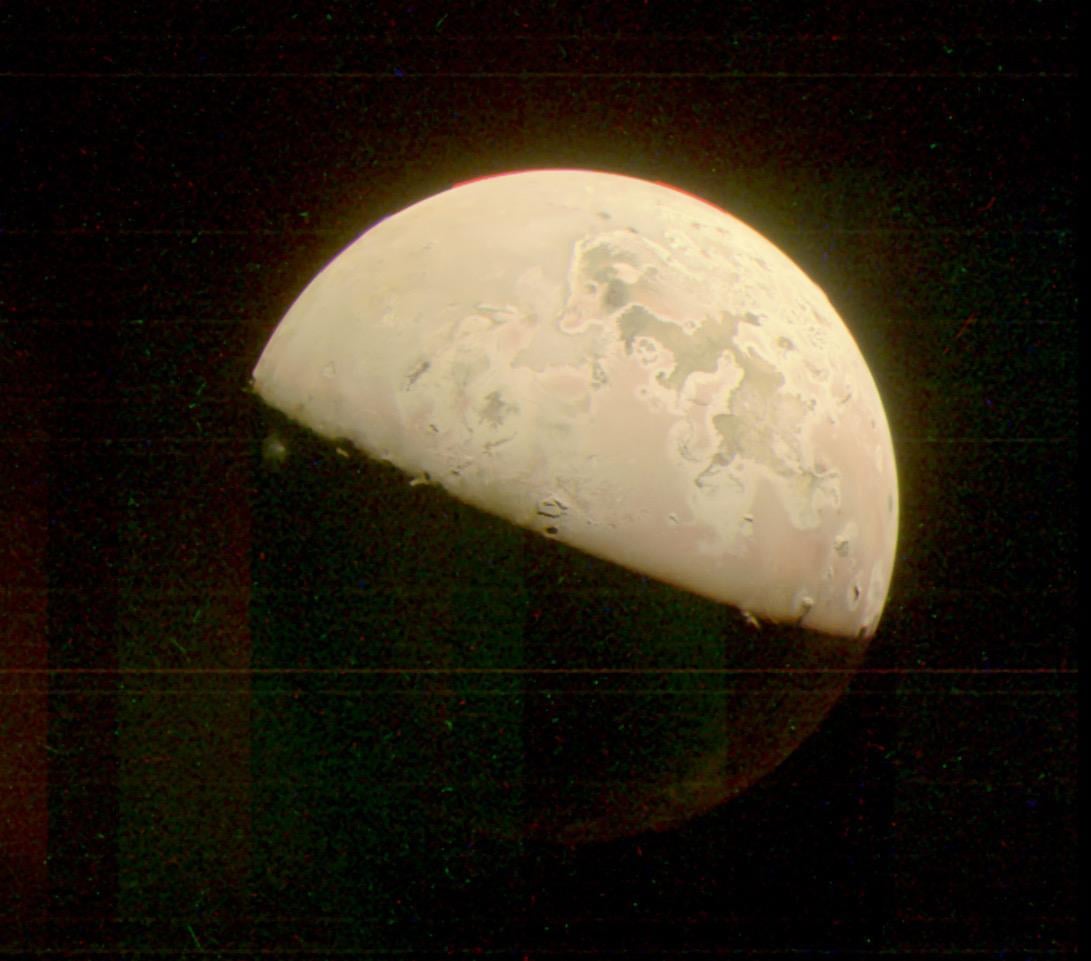
Jupiter's moon Io stands out as the most volcanically active world in the solar system, with hundreds of active volcanoes reshaping its surface. Some of those eruptions can send sulphur-rich plumes more than 500 kilometres above the moon, creating a landscape so extreme that it surprised even experienced planetary scientists.
That surprise began during Voyager 1's flyby of Jupiter in March 1979. Before the encounter, researchers expected Io to be an old, cold moon marked by impacts and little geologic change. Instead, the spacecraft returned images of a surface with almost no obvious impact craters, suggesting that something was constantly renewing the terrain.
Early on, the strange features seen in the pictures were so unexpected that some scientists reportedly wondered if they were looking at a problem with the instruments rather than a real phenomenon. As the data were examined more closely, it became clear that Voyager had captured evidence of active volcanism on an astonishing scale.
The discovery turned Io from a seemingly unremarkable moon into one of the most dramatic places known in planetary science. Its constantly changing surface and towering plumes showed that even far from Earth, a small moon could be intensely active and unlike anything scientists had anticipated.