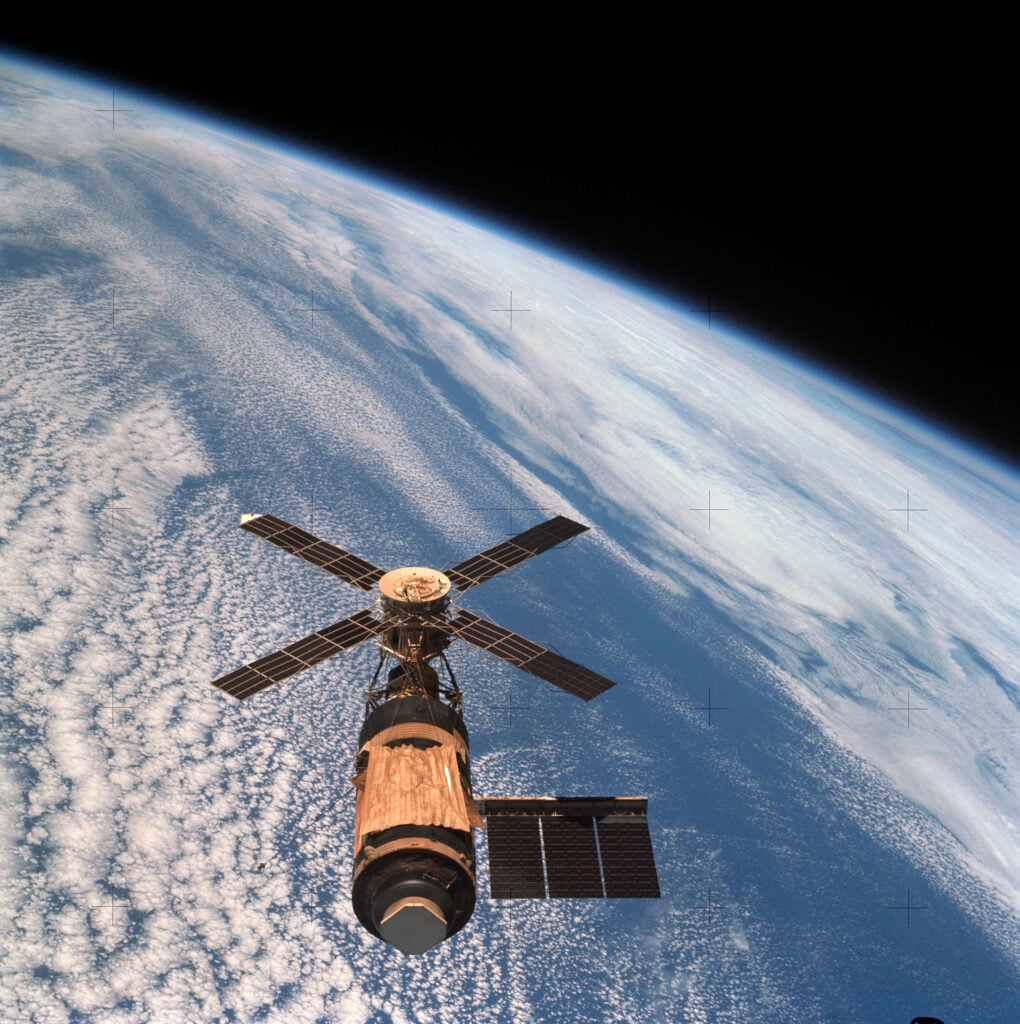
Skylab was one of the most ambitious projects of the early U.S. space program, built at a cost of roughly $2.2 billion and launched as America’s first space station. During its time in orbit, it hosted nine astronauts across three missions, giving the United States an important early platform for long-duration human spaceflight.
The station remained in orbit for a little more than six years. Its story ended dramatically when it reentered Earth’s atmosphere and broke apart, scattering wreckage across Western Australia. That fiery descent turned a landmark of space engineering into a widely remembered debris field on the ground.
The aftermath became part of Skylab’s unusual legacy. Pieces of the station were collected and preserved as museum exhibits, while some fragments were turned into Lucite-encased souvenirs. Reports tied to the event also suggest that some remains were put to more practical local use, adding a distinctive chapter to the station’s history after reentry.
Skylab’s rise and fall still stands out in space history because it combined technical ambition, human missions and a highly visible ending. From a major orbital laboratory to debris scattered across Australia, its full arc remains one of the most striking stories from the early era of crewed space stations.