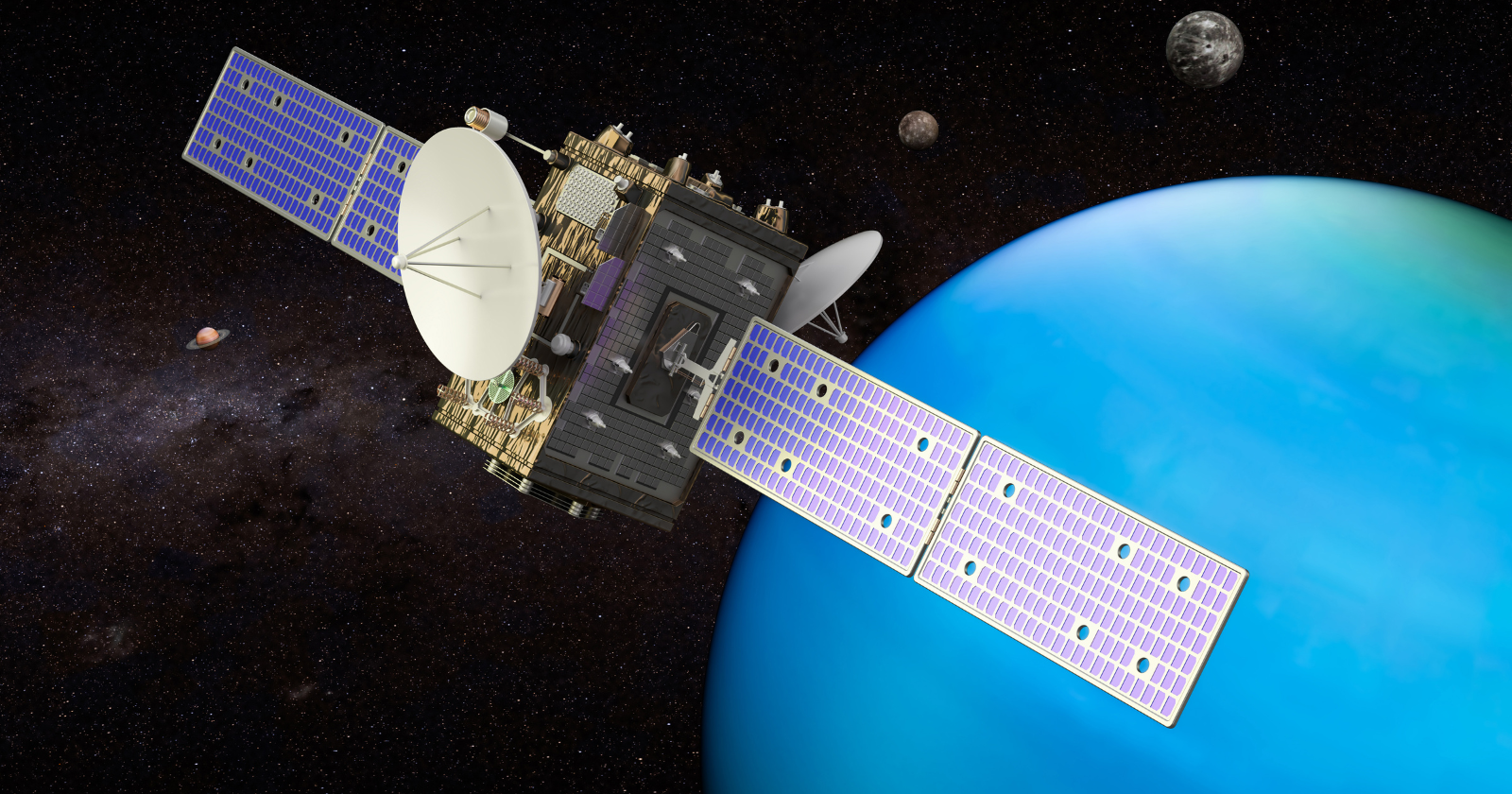
Scientists say two of Uranus's largest moons, Titania and Oberon, could contain hidden liquid water oceans beneath their frozen outer layers. The idea is striking because these distant worlds orbit far from the Sun, where sunlight is weak and surface conditions are extremely cold.
At a distance of nearly three billion kilometres from the Sun, Uranus's moons receive only a small fraction of the energy that reaches Earth. With surface temperatures around minus 200 degrees Celsius, they appear inhospitable at first glance. But researchers think heat generated inside the moons themselves could change that picture.
Instead of relying on solar warmth, Titania and Oberon may stay partially active because of radioactive decay deep in their interiors. That slow release of internal heat could be enough to prevent all the water below the surface from freezing solid, leaving underground oceans trapped under thick icy crusts.
If that scenario is correct, Titania and Oberon would add to the growing list of suspected ocean worlds in the solar system. The finding would also widen scientific interest in where potentially habitable environments might exist, showing that even remote, frozen moons can remain dynamic below the surface.





