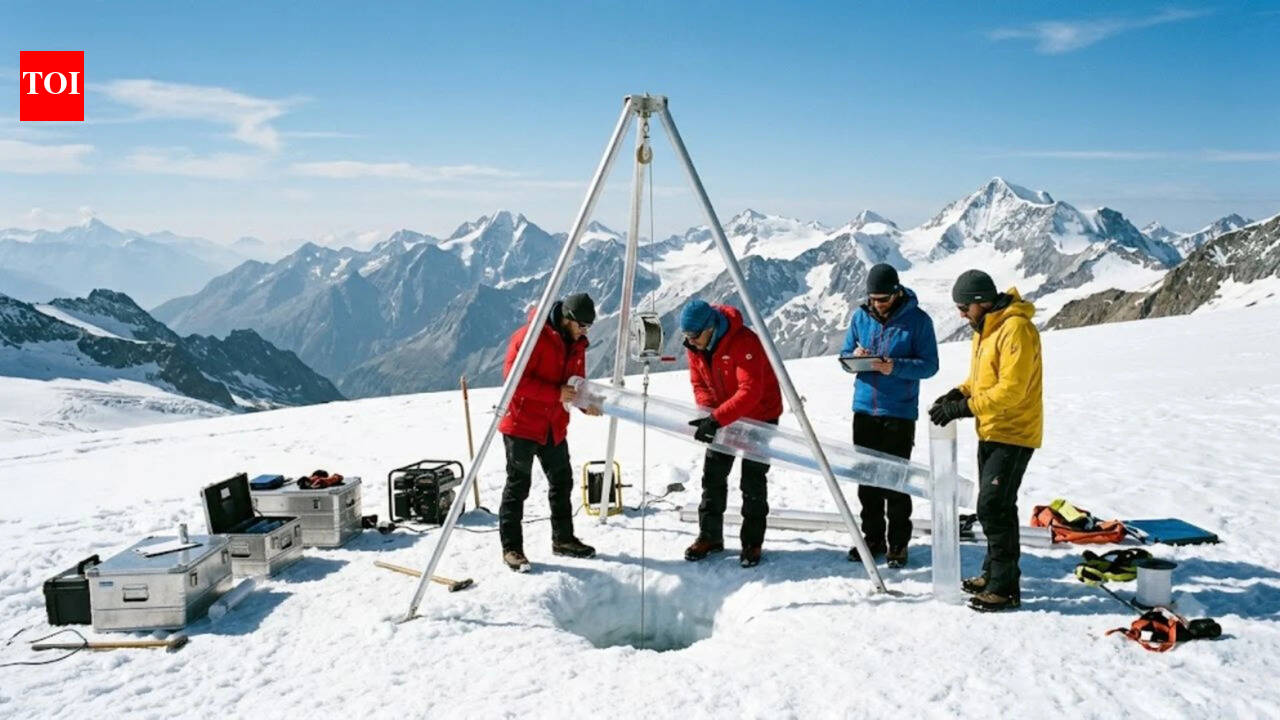
Scientists have recovered a 2,000-year climate record by drilling 33 feet into a shrinking Alpine glacier, uncovering layers of ice that hold clues to past environmental conditions. The find offers a rare look at how the atmosphere changed over centuries, including periods long before the industrial era.
Ice cores act like natural archives because each layer can preserve traces of the air and climate from the time it formed. By studying this Alpine glacier sample, researchers can piece together a long timeline of atmospheric shifts and better understand how today’s conditions compare with the distant past.
The discovery is especially significant because the glacier is vanishing. As Alpine ice retreats, valuable records stored in frozen layers can be damaged or lost, making recovery efforts more urgent for climate scientists trying to preserve evidence before it disappears.
The newly recovered core adds to growing research on how glaciers can document Earth’s climate history. In this case, drilling into endangered ice has produced a record that may help scientists reconstruct patterns in the atmosphere across roughly two millennia.