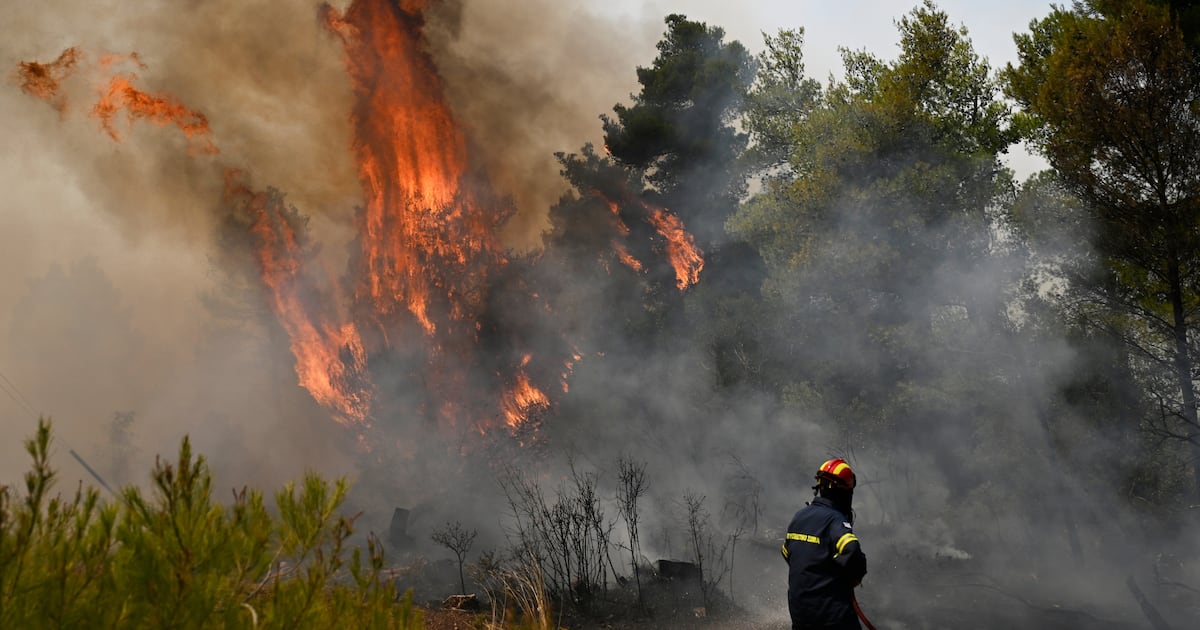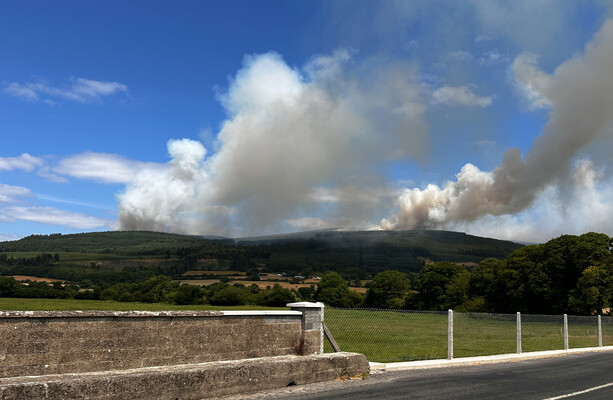
A major wildfire on Slievenamon in Co Tipperary has continued for days, burning across a wide area and causing serious damage to habitat and wildlife. The scale and duration of the blaze have pushed attention beyond the immediate firefighting effort and onto the landscape itself.
One of the main questions is whether the type of trees planted on the mountain may have helped the fire spread or burn more intensely. Sitka spruce, a species native to North America, is widely used in Coillte forests and has long been criticised by environmental campaigners, who argue that large blocks of commercial conifers can create ecological problems.
In the case of the Slievenamon wildfire, the debate centres on whether plantation design and tree choice can affect how a fire behaves. Conifer-heavy forests are often examined after major blazes because dense planting, dry conditions and the build-up of combustible material can all become part of the discussion. Based on the available details, the fire has renewed those concerns, though the snippet does not establish a direct cause.
The incident is likely to intensify scrutiny of forestry policy in Ireland, especially in areas where commercial planting meets sensitive upland habitats. As crews deal with the aftermath on Slievenamon, the wider issue is whether current planting models are resilient enough in a period of hotter, drier and more fire-prone conditions.