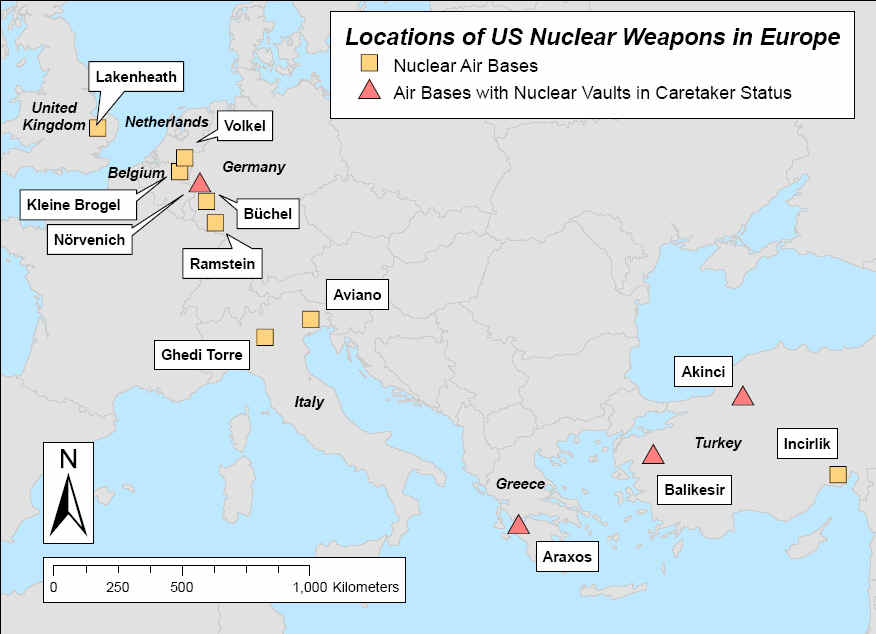
A report from Global Research examines Germany’s place in Europe’s defense structure by arguing that the country functions as part of a broader nuclear system inside the European military industrial complex. The article centers on the presence of US-made B61 tactical nuclear weapons in Europe and presents Germany as one of the states tied to that deployment.
According to the piece, B61 bunker-buster nuclear warheads have been stockpiled in several European countries for more than 20 years. It says six countries are involved, including five that are generally described as non-nuclear states, with Germany listed alongside countries such as Turkey, Belgium and Italy.
The article uses that long-running arrangement to question how nuclear power is defined within Europe’s security framework. Its main argument is that hosting, storing or integrating US nuclear weapons into military planning gives countries like Germany a direct role in the continent’s nuclear posture, even if they do not officially possess their own nuclear arsenals.
More broadly, the piece links the issue to NATO strategy and to the wider structure of military cooperation between the United States and Europe. In that framing, Germany is presented not simply as a conventional military actor, but as a key participant in a shared nuclear architecture that has existed across Europe for decades.