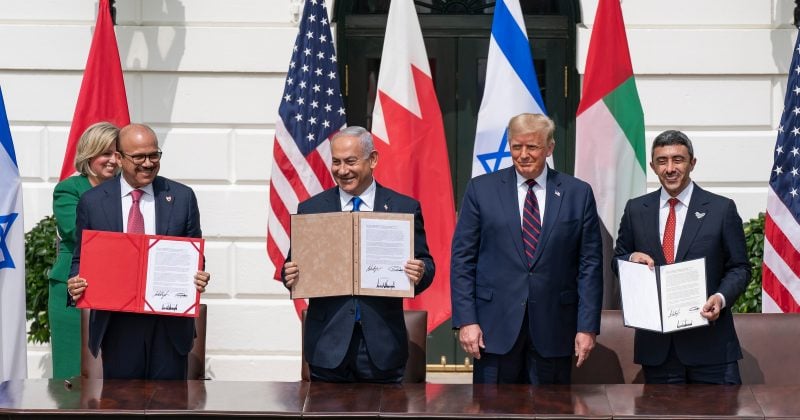
A proposed 30-year civilian nuclear cooperation agreement between the United States and Saudi Arabia is facing fresh uncertainty after Donald Trump linked the arrangement to participation in the Abraham Accords. The added political condition could change what had been framed as a long-term energy partnership into a broader test of regional alignment.
The deal had been seen as a landmark step in US-Saudi cooperation on civilian nuclear development. But tying it to normalization under the Abraham Accords introduces a new diplomatic hurdle, making the agreement about more than energy policy alone. That shift raises questions about how quickly the two sides can move forward and under what terms.
Because Saudi Arabia plays a central role in Middle Eastern politics and global energy markets, any delay or redesign of the agreement could have effects beyond the bilateral relationship. A nuclear cooperation pact of this scale carries strategic weight, and new political demands may reshape calculations across the region.
The result is a more complicated picture for both energy cooperation and regional diplomacy. What began as a long-duration civilian nuclear framework now appears to be bound up with wider geopolitical goals, leaving the future of the US-Saudi deal less certain than before.