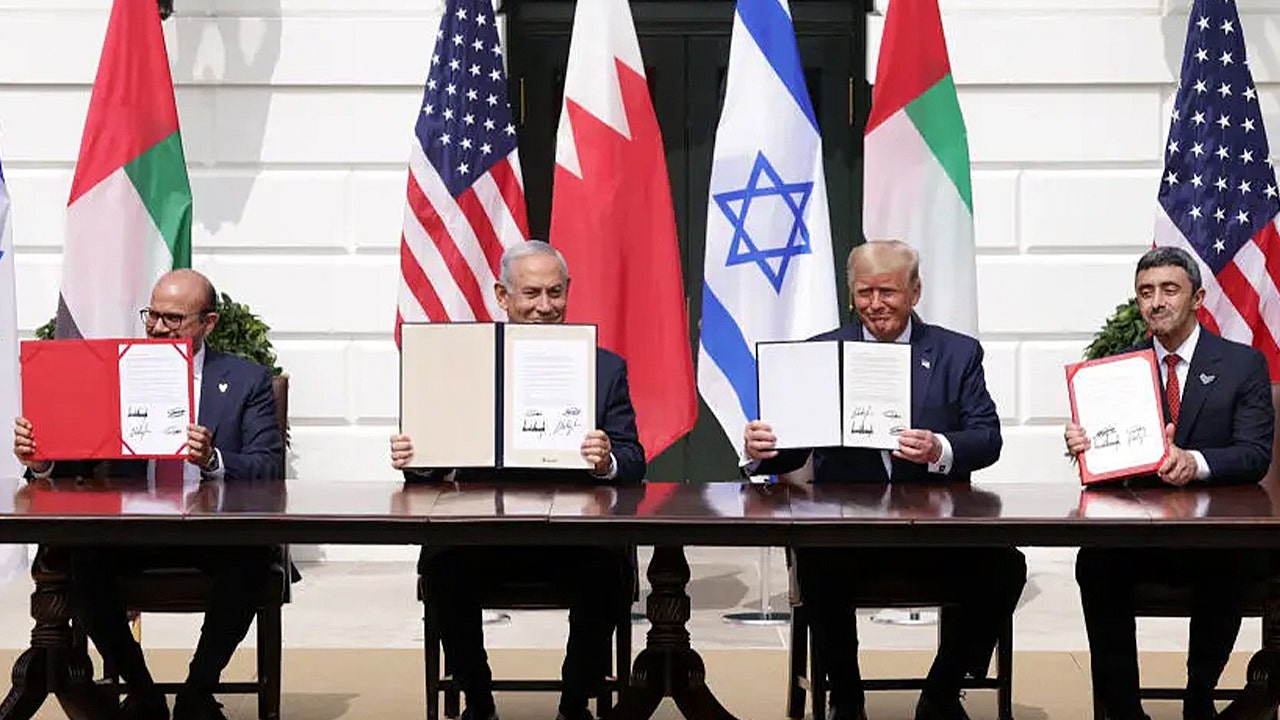
Debate over Israel’s diplomatic standing has intensified after President Donald Trump said more countries could soon join the Abraham Accords. His comments also drew attention to Saudi Arabia, with the suggestion that a nuclear agreement would depend on Riyadh joining the normalization framework.
That has sharpened a broader argument about whether Israel is becoming more isolated or still expanding its regional relationships. On one side, public sentiment reflected in polls has fueled claims that Israel is facing deeper opposition. On the other, ongoing diplomacy and talk of additional normalization steps suggest that official state-to-state ties may be moving in a different direction.
The Saudi Arabia question is central to that discussion. If a Saudi nuclear deal is tied to joining the Abraham Accords, it would underline how major diplomatic initiatives in the region remain connected to formal recognition of Israel. Even without a final outcome, the issue keeps the possibility of expanded ties on the agenda.
Experts are divided on what matters more right now: shifts in public opinion or the continued pursuit of diplomatic agreements. The contrast between those two signals is why the question of whether Israel is truly isolated remains unsettled, even as new speculation grows around the future of the Abraham Accords.