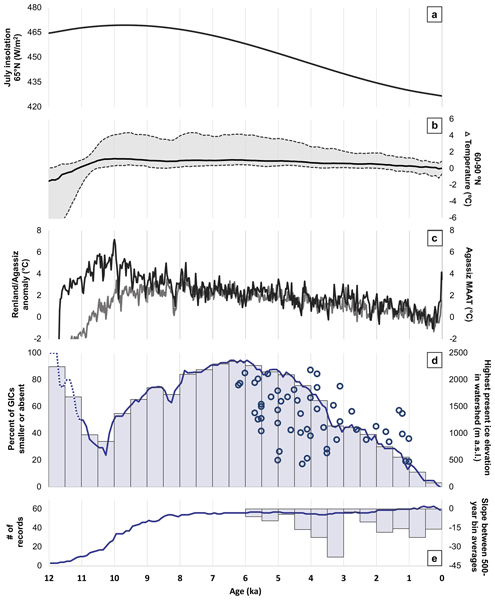
Research highlighted by Copernicus points to a more complicated history for Greenland's ice than a simple narrative of rapid, uninterrupted melt. The material references scientific work on Arctic glaciers and ice caps, including studies that use lake sediments to reconstruct how ice advanced and retreated over long periods.
The abstract provided says the retreat of Arctic glaciers remains one of the clearest signs of modern climate change. At the same time, it notes that scientists are also synthesizing Holocene-era records from lake archives to understand how glacier and ice-cap behavior has changed across thousands of years.
One of the cited studies focuses on northeast Greenland and uses high-resolution proglacial lake records to identify glacier advance before the Little Ice Age. That matters because it suggests Greenland's ice margins have shifted in notable ways even before the better-known colder interval, adding depth to the timeline of regional glacier change.
Taken together, the trimmed material suggests the main finding is not that climate change is absent, but that Greenland's ice history is more nuanced than many short-term summaries imply. Long-term geological records can show periods of both retreat and advance, helping researchers place today's changes in a broader Arctic context.





