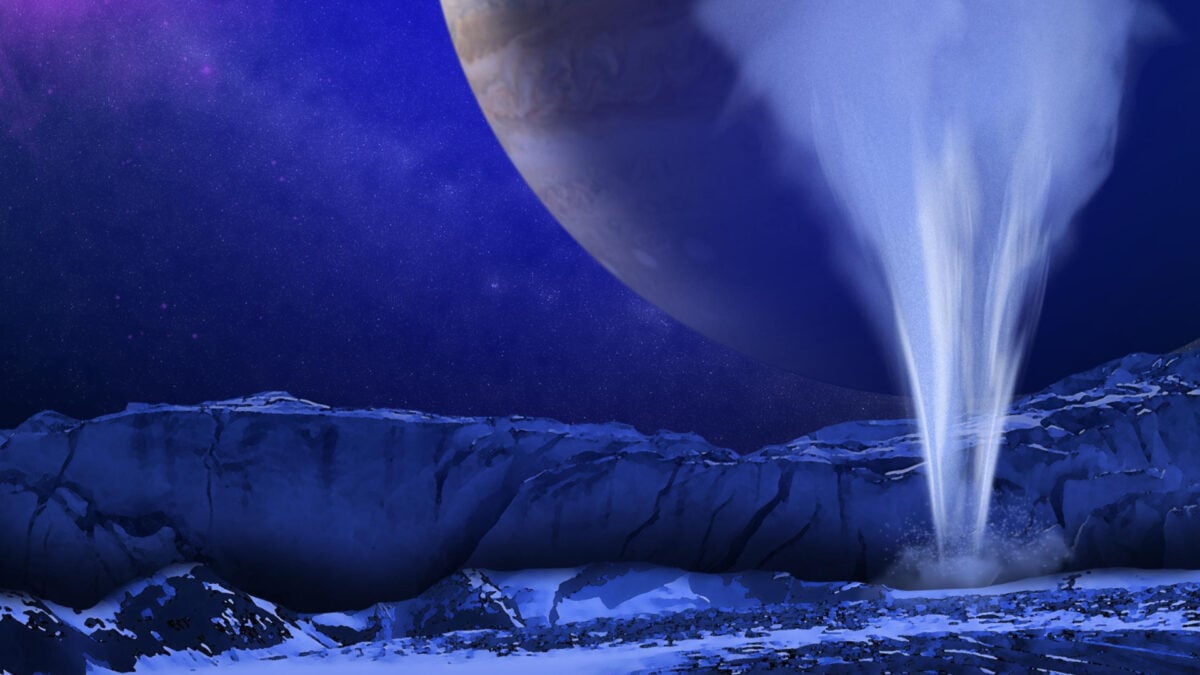
New research is raising fresh doubts about one of the most intriguing ideas about Europa, Jupiter’s icy moon: that small pools of water near the surface are fed directly by the vast ocean believed to lie far below. If that connection is weaker than scientists once thought, Europa’s buried ocean may be even less accessible than previous models suggested.
The question matters because Europa has long been viewed as a prime target in the search for environments that could support life. Scientists have hoped that material from the deep ocean might move upward through the ice shell, making it easier for future missions to study what lies beneath without drilling all the way down.
That possibility now appears more complicated. According to the report, researchers are reconsidering whether water seen or inferred near the surface could physically travel from the moon’s deep interior. The findings add to earlier concerns about Europa’s surface itself, including warnings that unusually fluffy or porous ice could pose hazards for spacecraft trying to land or operate there.
Taken together, the new work suggests Europa may be both scientifically rich and technically more challenging than expected. The moon’s hidden ocean remains one of the most compelling destinations in the solar system, but reaching meaningful clues from it may require more caution — and more sophisticated mission planning — than scientists previously assumed.