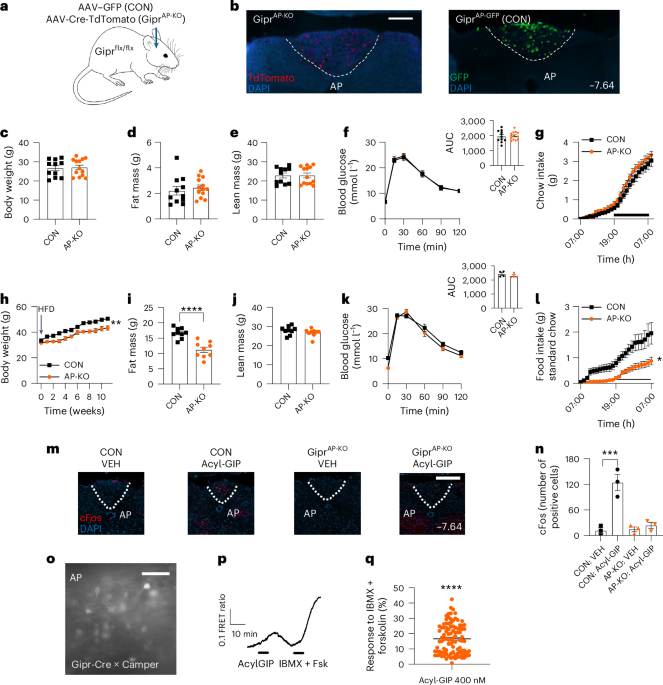
A new Nature study examines how different brain regions control eating behavior when the glucose-dependent insulinotropic polypeptide receptor, or GIPR, is either activated or blocked. Using mice, researchers focused on two sites linked to appetite and body-weight regulation: the area postrema and the hypothalamus.
According to the report, the team used region-specific knockout methods to remove GIPR in one brain area at a time. This allowed them to test how GIPR agonism and GIPR antagonism influence food intake and body weight through distinct neural pathways, rather than treating the brain as a single uniform target.
The findings add context to growing interest in medicines that act on both GLP-1 and GIP signaling. The article notes that dual agonism of GLP-1 and GIP receptors is already used in the once-weekly injectable drug tirzepatide, which has drawn attention for its effects on weight and metabolic health.
By separating the roles of the area postrema and hypothalamus, the study suggests that activating GIPR and blocking GIPR may reduce food intake through different parts of the brain. That distinction could matter for the design of future obesity and appetite therapies, especially as researchers work to understand why related drugs can produce strong effects on eating behavior and body weight.