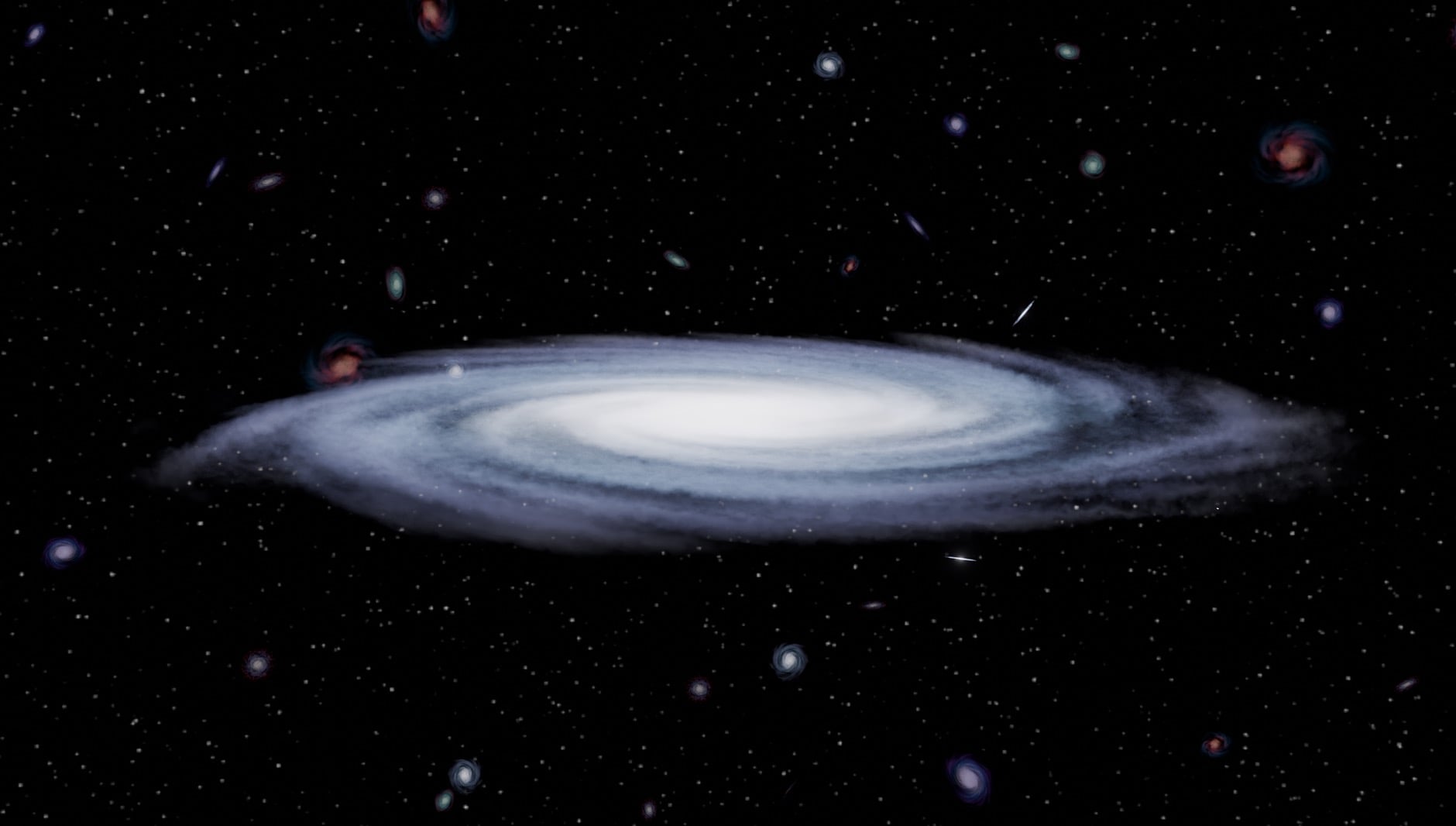
Observations from the James Webb Space Telescope are adding a new twist to the story of the early universe. Some distant galaxies appear far more mature than expected, with light signatures that suggest stars may have been forming over extremely long periods, even though those galaxies are being seen at a time when the cosmos itself was only a few hundred million years old.
That creates an obvious timeline problem. If a galaxy observed roughly 300 million years after the Big Bang seems to contain a stellar population estimated at around two billion years old, both numbers cannot fit the same cosmic history without something being re-examined. The tension is not simply about one surprising image, but about how astronomers interpret the ages and growth histories of the earliest galaxies.
Researchers are therefore reconsidering the models used to read these ancient signals. The issue may lie in how galaxy light is translated into star-formation histories, how stellar populations are dated, or how early galaxies built up mass and heavy elements. In other words, Webb may be exposing limits in current assumptions rather than proving that the universe itself is older than the accepted 13.8 billion years.
The broader significance is that Webb is pushing cosmology into a more precise and challenging era. Its data are forcing scientists to refine ideas about when the first stars formed, how quickly galaxies evolved, and what “mature” really means in the infant universe. The result is not a discarded cosmic timeline, but a sharper debate over how the earliest chapters of cosmic history should be understood.