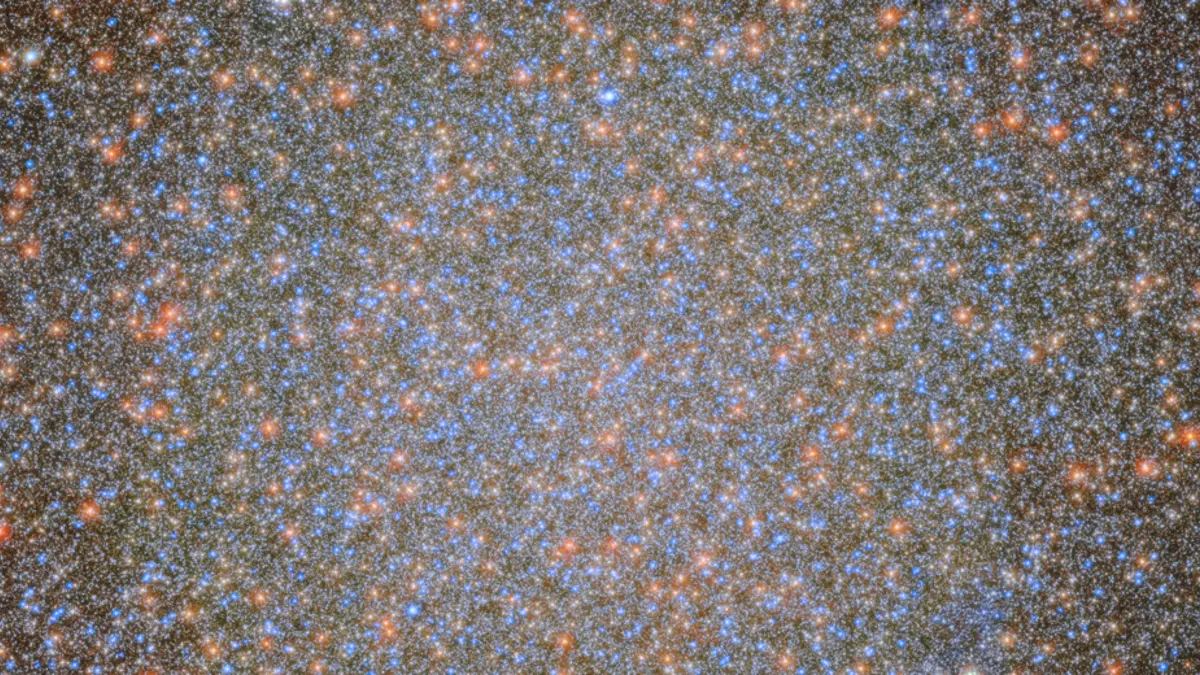
Astronomers have identified the first stellar-mass black hole in Omega Centauri by combining long-term observations from the Hubble Space Telescope with data from the James Webb Space Telescope. The result stands out because the object was not found through the usual signs of feeding activity, such as X-rays or radio emission.
Instead, researchers tracked the extremely small motion of a star across the sky over 23 years. That slow, precise shift revealed the gravitational influence of an unseen companion, pointing to a stellar-mass black hole hidden in Omega Centauri.
The finding highlights a different way to search for black holes that are not actively pulling in material. Many black hole discoveries depend on bright signals produced when gas falls inward, but this case relied on astrometry, or measuring stellar motion with exceptional accuracy over a very long period.
By using Hubble’s decades of observations together with Webb’s newer capabilities, astronomers were able to uncover a black hole that had remained invisible to more conventional searches. The discovery adds a new piece to the picture of Omega Centauri and shows how patient, high-precision monitoring can reveal dark objects that would otherwise stay undetected.