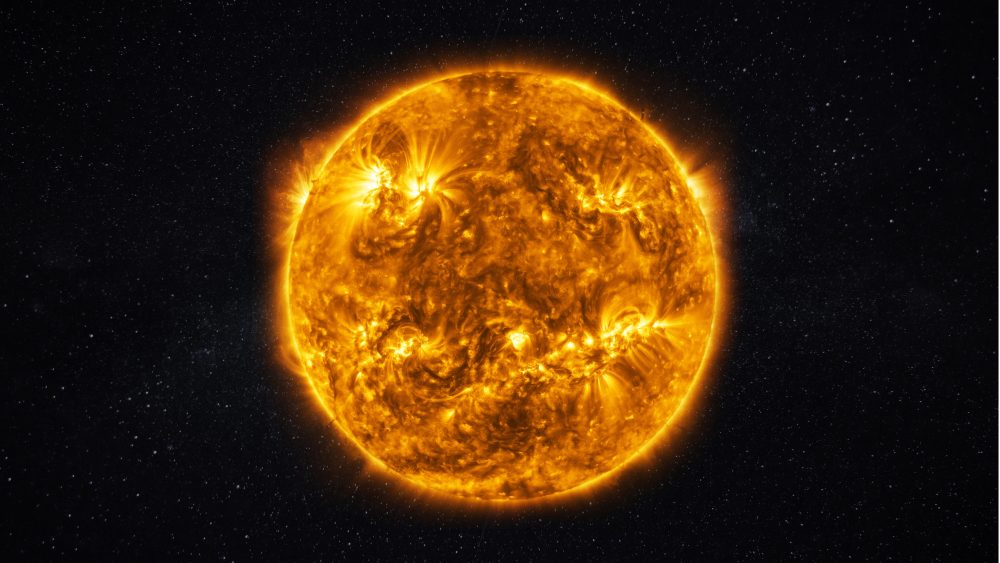
Astronomers have revised a key number in solar chemistry, reporting that the Sun contains about 55 percent more silver than the value widely used over the past decade. The updated estimate changes how researchers describe the makeup of our star and corrects what the study presents as an important measurement error.
According to the report, the new solar silver abundance now lines up much more closely with the composition seen in meteorites. That agreement matters because scientists often compare the Sun with primitive space rocks to test whether their models of the solar system’s original material are consistent.
The finding does not mean the Sun suddenly gained silver. Instead, it means researchers have recalculated how much of the element is really present in the Sun’s outer layers based on improved analysis. By raising the accepted number, the study helps reduce a long-running mismatch between solar measurements and meteoritic evidence.
Results like this are important because the Sun serves as a reference point for astronomy. When scientists refine the abundance of an element such as silver, it can improve broader work on stellar composition, solar system history, and the methods used to measure trace elements in stars.