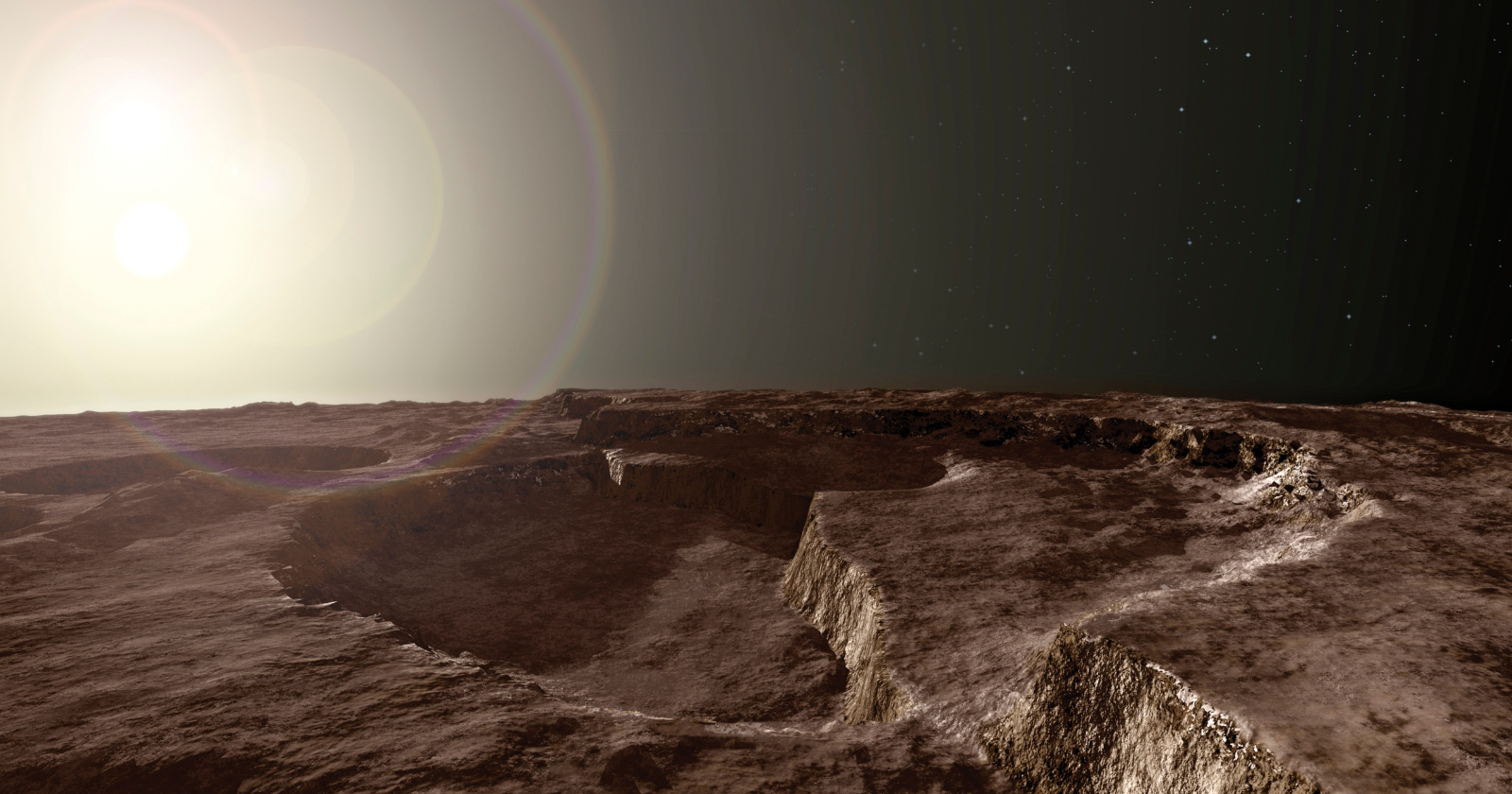
Mercury is the closest planet to the Sun, but some of its most remarkable landscapes are found in deep polar craters that sunlight never reaches. While exposed areas near the equator can heat up to around 430 degrees Celsius during the day, these permanently shadowed crater floors remain cold enough to preserve water ice.
NASA’s MESSENGER mission confirmed in 2012 that ice is present in these dark regions near Mercury’s poles. The finding highlighted one of the most dramatic contrasts in the solar system: frozen material surviving only metres away from terrain that can become hot enough to melt lead.
The explanation lies in Mercury’s geography and the angle of sunlight near the poles. In certain deep craters, the Sun stays so low on the horizon that the floor never receives direct light. That creates long-lived cold traps where ancient ice can endure despite the planet’s harsh overall environment.
The discovery changed how scientists view Mercury, showing it is not just a scorched, airless world but a planet with extreme temperature boundaries packed into very small distances. Its polar craters have become a striking example of how ice can survive even on the innermost planet when the right conditions persist for long enough.