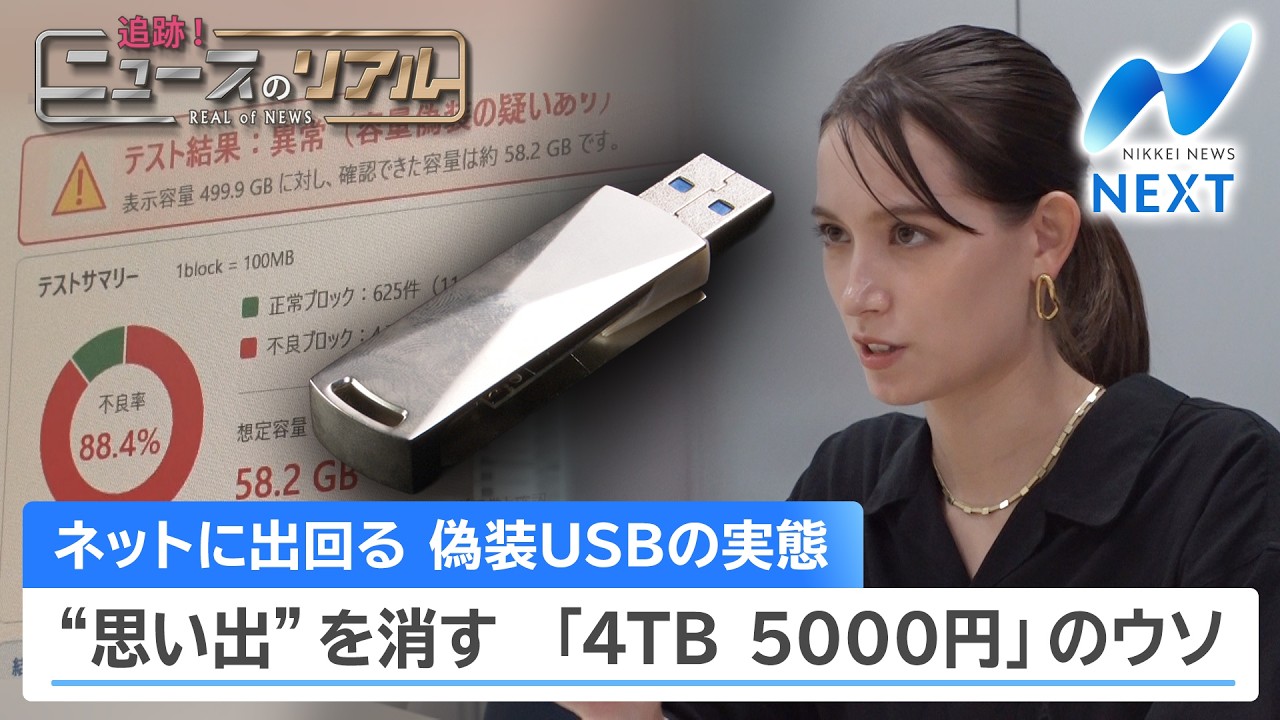
Low-priced USB drives being sold online with extremely large advertised storage capacities are raising new concerns for consumers. According to tests referenced in the report from Tokyo, some of these products do not contain the amount of memory printed on the label and may offer only a small fraction of the promised space.
That gap between the stated capacity and the real hardware can create serious problems. People may think their files have been saved normally, only to discover later that data has been corrupted, overwritten or never stored properly. For anyone using these devices for photos, work documents or backups, the result can be permanent data loss.
The risk is not limited to faulty storage. The report also warns that some fake USB drives may expose users to malware infections and information theft. That means a bargain-priced device could become a security threat as well as a storage failure, especially if buyers trust the label and plug it directly into personal or work computers.
The issue highlights a broader problem with ultra-cheap electronics marketed online through eye-catching specifications. When a USB drive promises unusually large capacity at a very low price, buyers may be getting a counterfeit or manipulated product instead of genuine storage. The warning serves as a reminder that storage claims should be treated carefully, particularly when the offer seems far better than normal market prices.