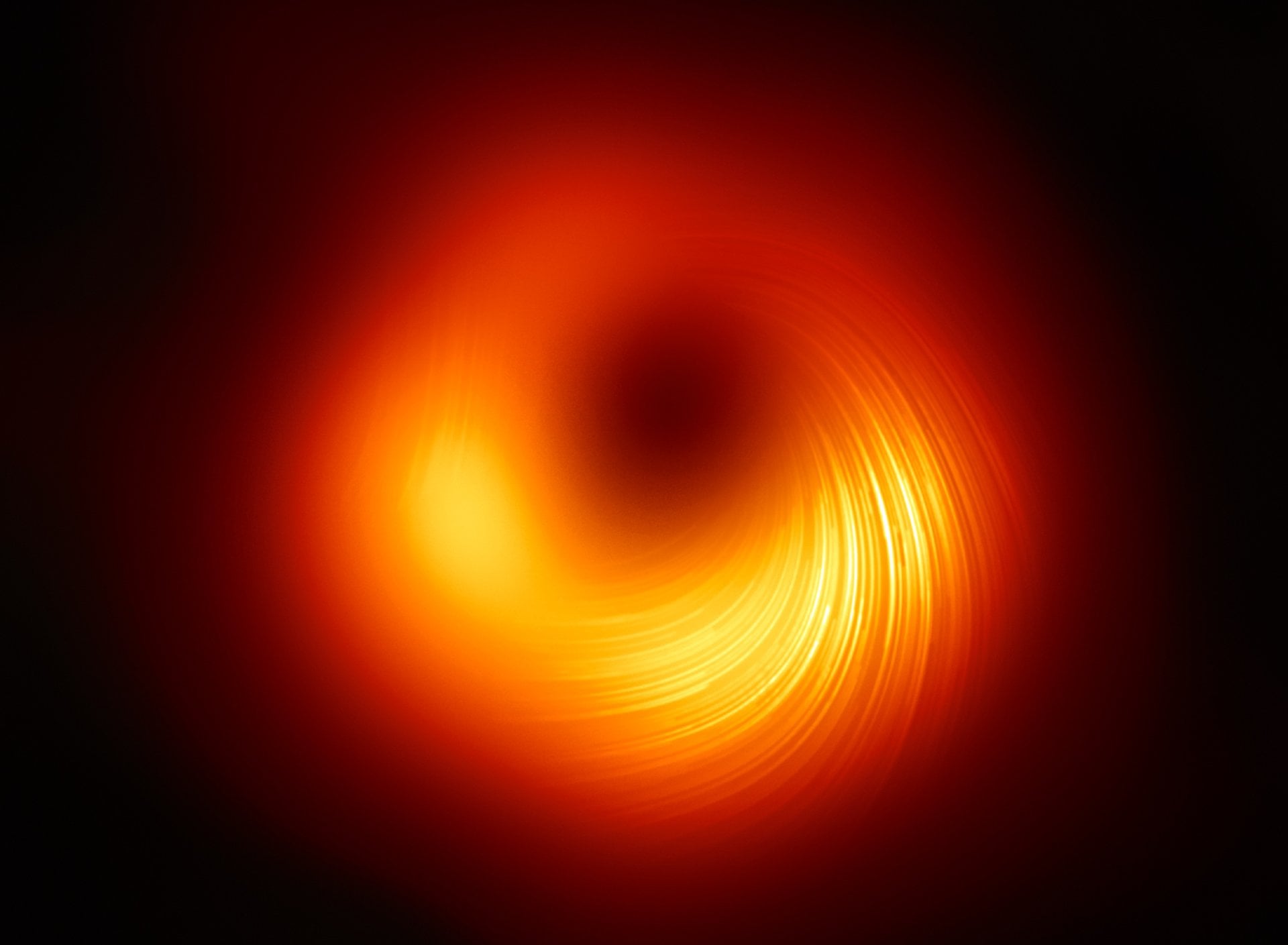
New research is offering a sharper look at the black hole in the center of M87, the giant galaxy that became famous after the Event Horizon Telescope produced the first direct black hole image in 2019. The latest work focuses on newly revealed properties of that object through a more detailed analysis of how it appears at different observing frequencies.
According to the report, researchers from the Shanghai Astronomical Observatory of the Chinese Academy of Sciences worked with international collaborators on the first spatially resolved dual-frequency spectral study of the M87 black hole. Instead of relying on a single view, the team examined observations across two frequencies to study how the emission changes around the black hole.
That approach can give astronomers a better picture of the environment near the black hole, including regions that help produce the light detected by global telescope networks. By comparing the structure seen at different frequencies, scientists can learn more about the physical conditions in the material surrounding the object.
The study also shows how black hole imaging is moving beyond the landmark first picture toward more precise measurements of its properties. Building on years of observations gathered by observatories around the world, the new results add another layer to scientists’ understanding of M87 and the extreme physics at work near its core.