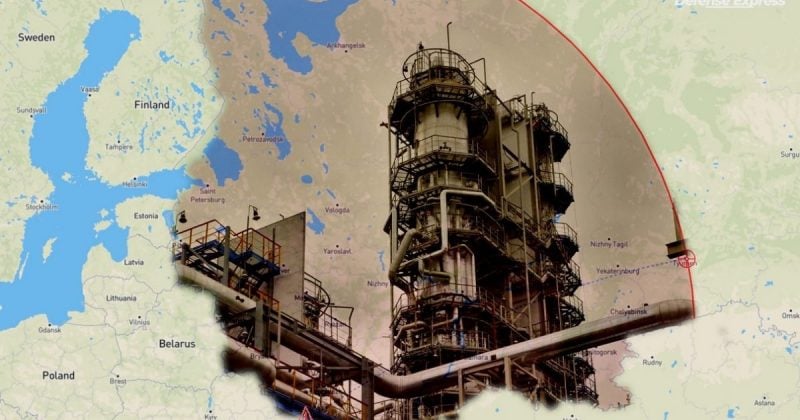
A fire broke out at the Tyumen oil refinery after a reported Ukrainian drone strike far inside Russian territory, in what appears to be one of the deepest confirmed attacks on Russia's energy infrastructure. The strike, described as roughly 2,000 kilometers inside Russia, highlights the growing reach of cross-border drone operations.
The refinery attack immediately drew attention because Tyumen is part of Russia's broader oil processing network. Any disruption at a major refinery can raise concerns about fuel production, supply flows, and the resilience of domestic energy facilities, even when the full extent of the damage is not yet clear.
Markets also reacted to the news. A strike on Russian refining capacity can add volatility to oil prices by increasing worries about supply risk, especially when it targets infrastructure well beyond border regions. That has also renewed discussion around commodity-linked digital assets, which sometimes move alongside shifts in energy and macro risk sentiment.
While details remain limited, the Tyumen oil refinery incident underscores how the war's economic effects continue to spread beyond the battlefield. Attacks on oil infrastructure can influence trading in energy, broader risk assets, and expectations around how vulnerable critical supply chains may be in the months ahead.