A commentary from Antiwar.com argues that the long-promised two-state solution is still treated by many US politicians as a default policy line, even though the writer says the conditions that once made it seem achievable have largely disappeared. The piece frames the issue as a gap between official rhetoric and current political reality.
The article looks back to the early 1990s, when the Oslo accords were signed at the White House under President Bill Clinton. At that point, the creation of a Palestinian state alongside Israel was widely seen as an attainable goal and a central part of diplomacy around the conflict.
It also notes that US political support for that vision remained strong years later, pointing to a 2011 Senate resolution that drew support from roughly 90 percent of senators. In the writer’s view, that broad backing showed how deeply the two-state formula had become embedded in Washington policy language.
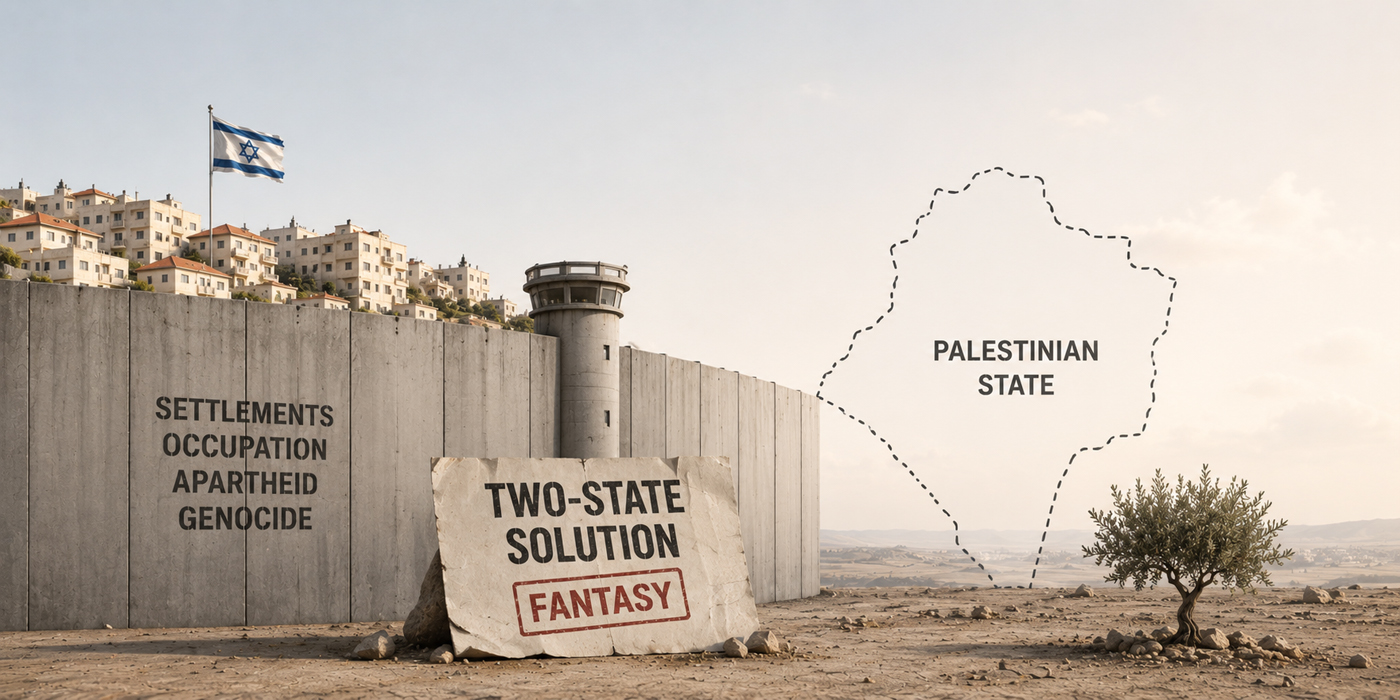
But the commentary’s main argument is that repeating the phrase now can serve as a way for elected officials to avoid confronting harder questions about what is actually possible. Rather than presenting the two-state solution as a workable path by default, the piece says policymakers should acknowledge how much the landscape has changed since Oslo and speak more honestly about the future of the Israeli-Palestinian conflict.