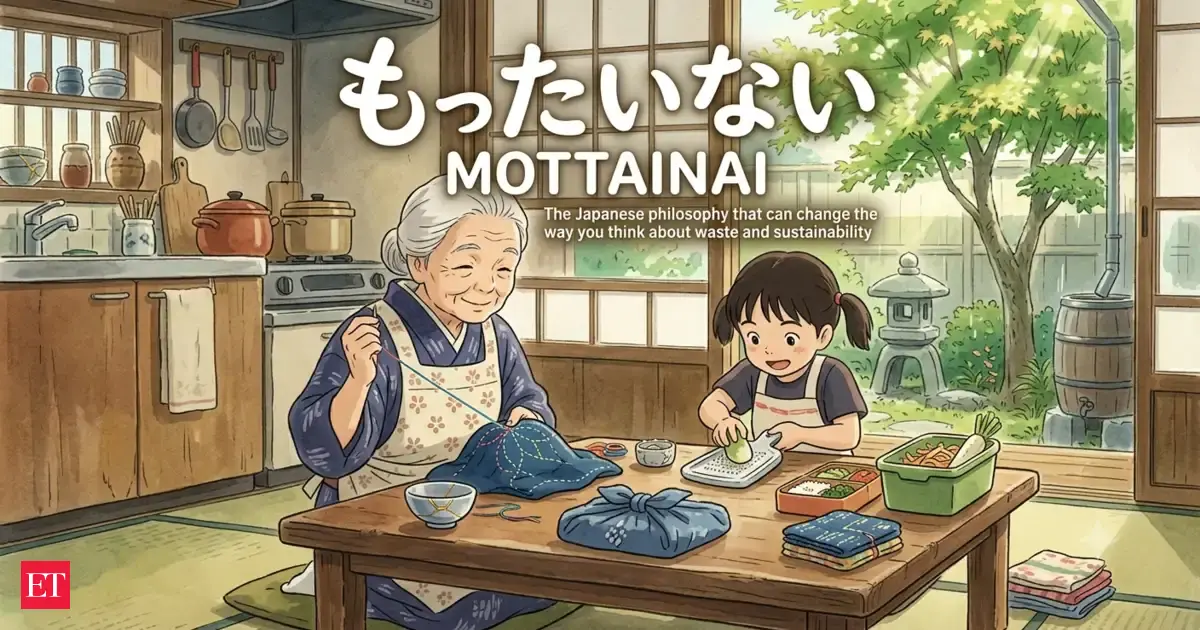
Mottainai is a Japanese philosophy that offers a simple but powerful way to think about waste. At its core, the idea encourages gratitude for the things people own and the resources used to make them. Instead of treating objects as easily replaceable, it asks people to notice their value and avoid unnecessary waste.
The mindset stands in contrast to modern habits in which replacing an item often feels easier than repairing it. It applies to everyday choices such as throwing away food, discarding clothes too quickly, or getting rid of usable household goods. By slowing down consumption, mottainai promotes a more thoughtful relationship with what people buy and use.
A key part of the philosophy is finding ways to extend the life of possessions. That can mean repairing broken items, reusing old belongings in new ways, and being more careful before deciding something is no longer useful. In that sense, mottainai is not only about saving money or reducing clutter, but also about respecting materials, labor and natural resources.
As sustainability becomes a bigger global concern, mottainai offers a practical mindset for daily life. Its message is straightforward: consume with awareness, waste less, and appreciate more. That approach can reshape personal habits while supporting a broader culture of reuse and responsibility.