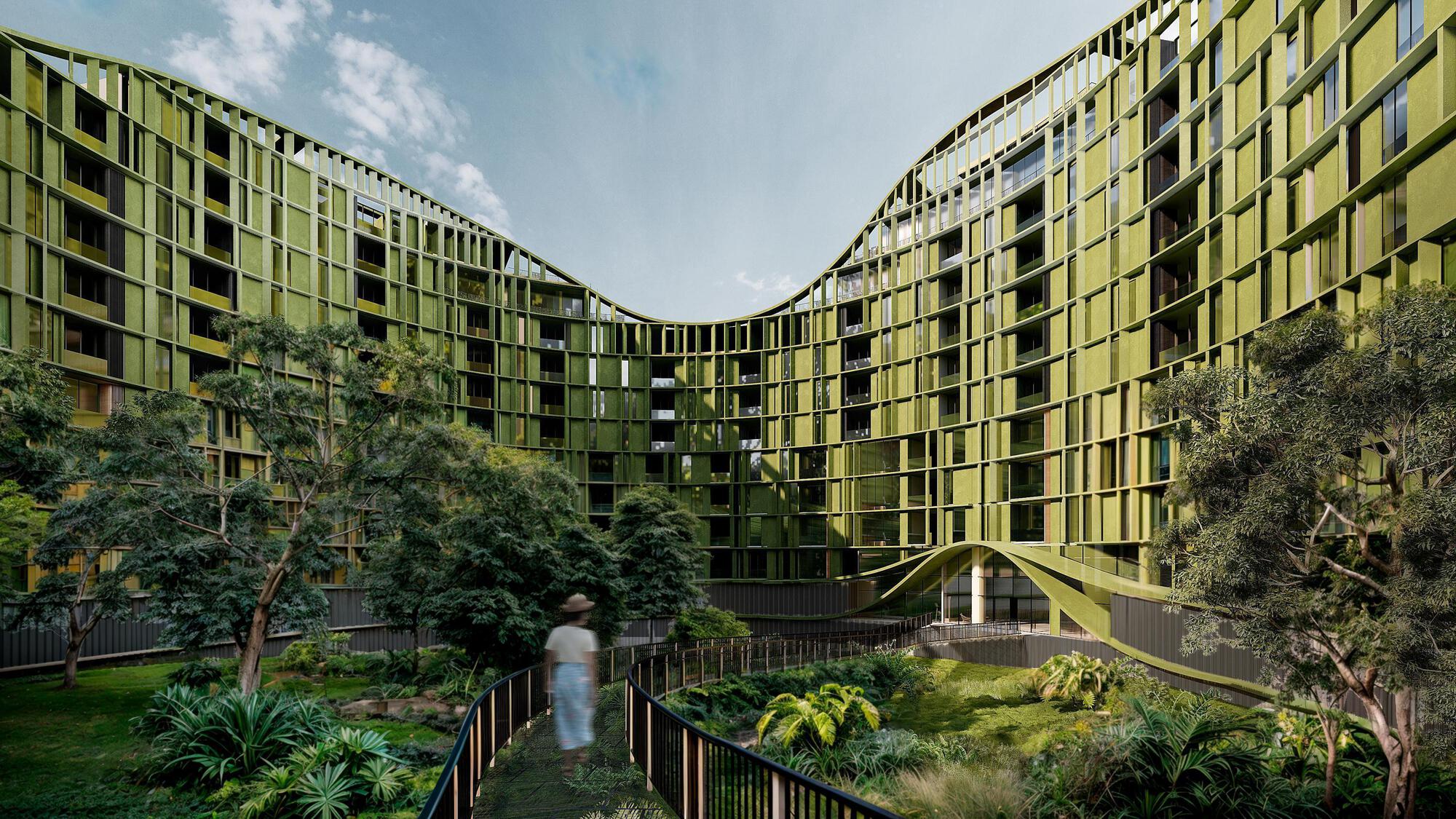
ArchDaily’s roundup of six unbuilt collective housing projects focuses on how contemporary architecture is trying to answer two linked pressures: the global housing deficit and the rapid growth of urban populations. Rather than treating housing as a purely technical problem, the featured concepts explore how building form can support new ways of living together.
The theme suggested by the collection is that collective housing is increasingly being used as a testing ground for fresh spatial ideas. Architects are revisiting shared living models and experimenting with layouts, circulation and communal areas that can do more than simply maximize units. The broader aim is to create places that balance density with everyday quality of life.
One of the highlighted proposals is presented as a vertical neighborhood built around a forest, pointing to a design approach that blends collective living with a strong environmental and social identity. Even in unbuilt form, ideas like this show how housing schemes are being imagined as communities with shared spaces, greenery and stronger connections between residents.
Taken together, the six projects reflect a wider architectural shift toward housing that responds to social needs as much as physical demand. By showcasing unbuilt work from its community, ArchDaily draws attention to emerging design thinking around collective housing and the future of urban living.