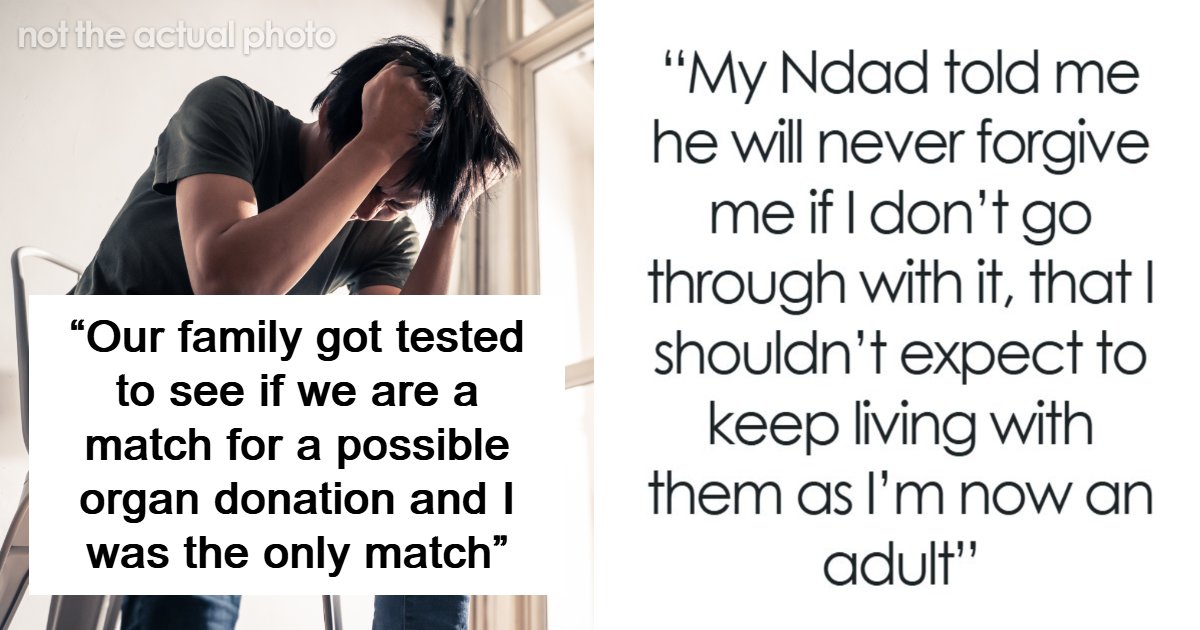
A widely shared human-interest story centers on an 18-year-old who refused to donate part of his lung to his mother after her health reportedly declined from years of chain-smoking. The case has drawn attention because it frames a painful question many families hope never to face: should a child be expected to take on major medical risk to save a parent?
According to the account highlighted by Bored Panda, the mother believed her son should step in as her condition worsened. But the story also points to a troubled family history, suggesting she had not treated him well over the years. That background has become central to how readers are judging the dispute, with many arguing that biological ties alone do not erase past harm.
The situation appears to have intensified after the teenager said no, turning a private medical and family conflict into a larger online debate. Much of the reaction has focused on bodily autonomy, with commenters emphasizing that organ or tissue donation must remain a voluntary decision, even between close relatives.
The story is resonating because it blends medical ethics with family expectations and resentment. While some people see a moral duty to help a parent in crisis, others view the teen’s refusal as a valid boundary, especially given the risks involved and the mother’s role in her own declining health.