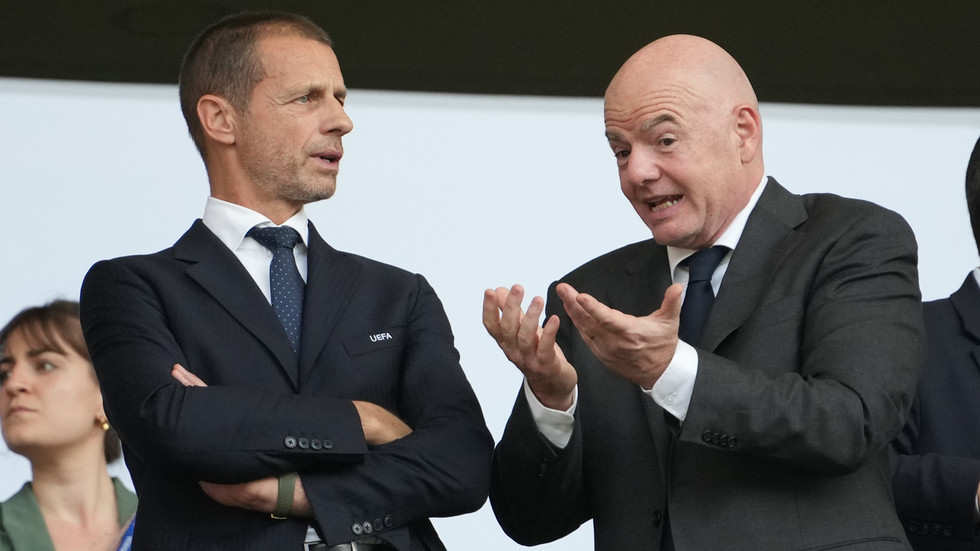
As attention builds around the next FIFA World Cup, a growing debate is focusing on whether the tournament will put human rights at the center of its planning and public image. The concern is that football’s biggest event could instead become another case of sportswashing, where the spectacle of the game overwhelms deeper political and social questions.
That scrutiny has intensified because U.S. President Donald Trump is expected to be part of the trophy ceremony when the 2026 World Cup concludes. Critics argue that such a moment would turn the final stage of the competition into more than a sporting celebration, linking FIFA’s showcase event to a powerful political figure in a way that raises fresh concerns about image management.
The issue is also being shaped by recent scenes from the FIFA Club World Cup. In East Rutherford, New Jersey, FIFA president Gianni Infantino and Trump presented the trophy to Chelsea captain Reece James, underscoring how closely football’s top ceremonies can intersect with political power and global branding.
Against that backdrop, calls for the 2026 FIFA World Cup to prioritize human rights are becoming harder to ignore. The broader message is that FIFA should treat rights protections as a central goal of the tournament, rather than allowing them to be overshadowed by pageantry, symbolism, and high-profile appearances.