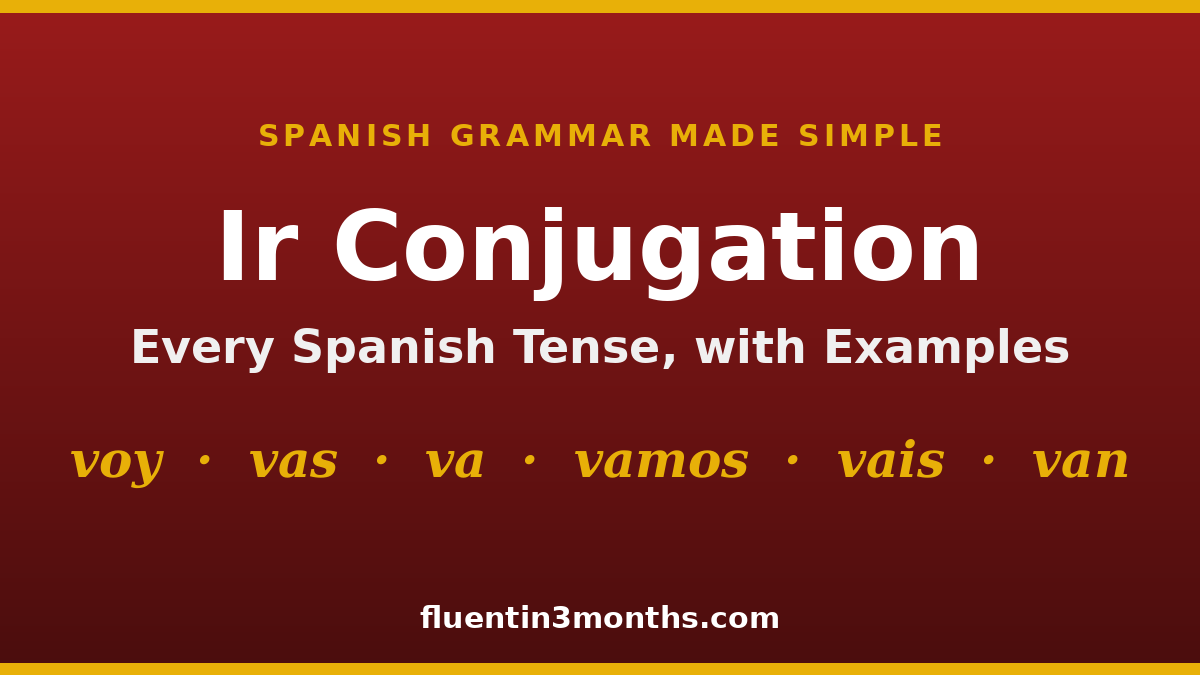
A new language-learning guide focuses on the Spanish verb "ir," explaining how to use and conjugate one of the most common and irregular verbs in the language. Because "ir" means "to go," it appears constantly in everyday Spanish, especially when talking about movement, plans, routines, and common conversations.
The article presents Spanish ir conjugation in a simple format aimed at learners who want a clearer way to understand its changing forms. It highlights why the verb often causes confusion for beginners: even though it is introduced early, it does not follow regular conjugation patterns.
According to the overview, the lesson covers ir across all tenses and includes examples to show how the verb works in real situations. That makes it useful not only for memorizing forms, but also for understanding when Spanish speakers use ir in travel-related phrases, daily activities, and future intentions.
For students building a foundation in Spanish, the guide positions ir as a must-know verb rather than a small grammar detail. By combining plain explanations with examples, it aims to make one of Spanish's most essential irregular verbs easier to recognize, practice, and use correctly.