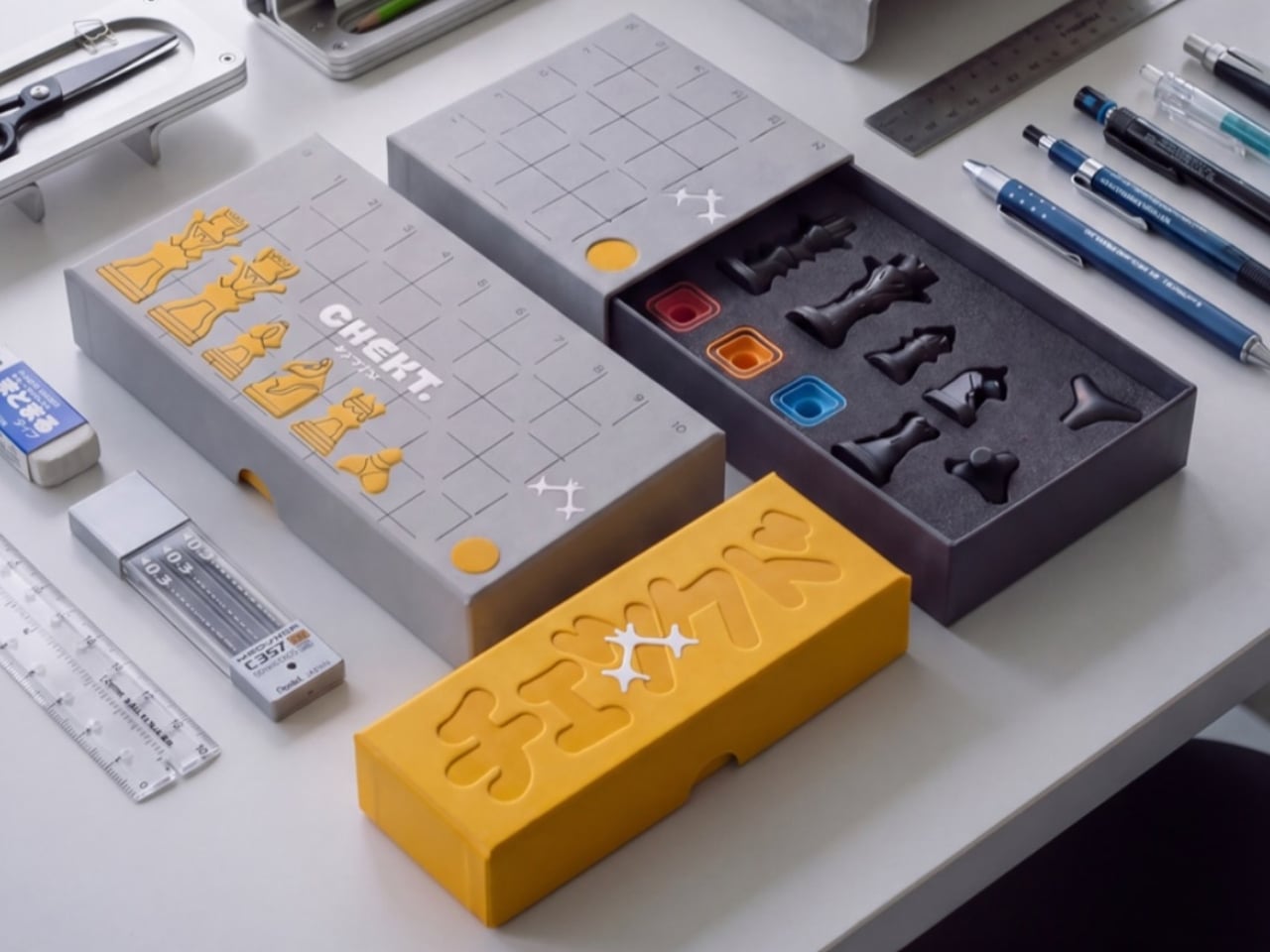
A modern chess set is drawing attention for doing more than supporting play. The design positions the board and pieces as desk art, giving the familiar game a more sculptural presence in a workspace or home office.
Chess has inspired notable design interpretations before, including experiments from Bauhaus-era creatives in the 1920s. Even so, the Staunton style that became standard in the 1800s has remained the dominant visual language for the game, making any serious redesign stand out immediately.
What makes this concept notable is its attempt to balance usability with aesthetics. Rather than treating a chess set as something to store away between matches, the design suggests it can stay in view as a decorative object while still functioning as a practical set for everyday play.
That blend of function and form helps explain the appeal. For design-minded buyers, a chess set like this offers a fresh alternative to traditional pieces without losing the cultural weight of the game’s long visual history.