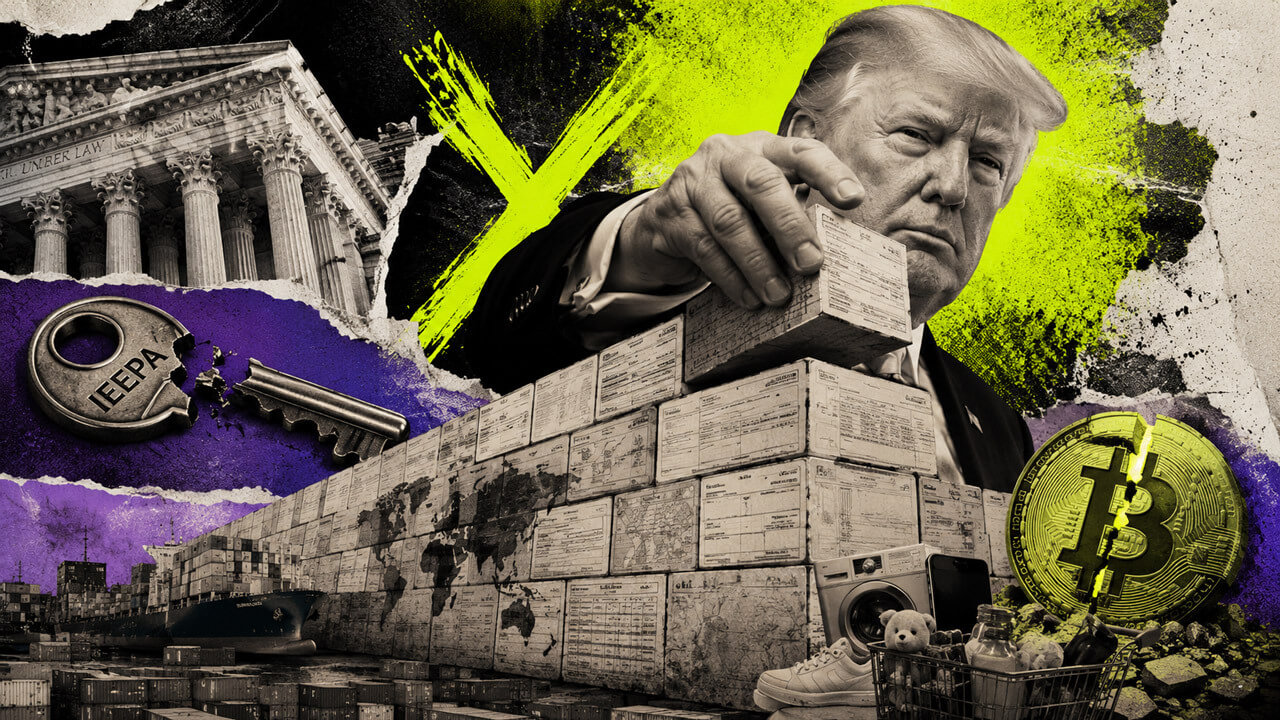
A new debate over Donald Trump’s tariff strategy is drawing attention far beyond trade policy. The focus is on a February Supreme Court response that said the emergency law used to justify broad import taxes did not give the president authority to impose tariffs in that way. Even so, the article argues that Washington has treated the ruling as an obstacle to work around rather than a hard stop.
That matters because tariffs can feed directly into prices paid by businesses and consumers. If import costs stay elevated, inflation can remain stubborn even when other economic pressures begin to ease. In that view, a legal path that allows trade taxes to survive could keep price growth from cooling as quickly as markets hope.
The inflation link is especially important for Federal Reserve policy. When inflation stays firm, the Fed has less flexibility to cut rates or take a softer stance. That puts Bitcoin and other risk-sensitive assets under pressure, because crypto markets often move with expectations for interest rates, liquidity and the broader macro outlook.
The issue therefore connects several major themes at once: presidential power, trade law, inflation and digital assets. What starts as a legal question around Trump’s tariffs could continue to shape consumer prices and monetary policy, leaving Bitcoin caught in the middle of the Fed’s response.


