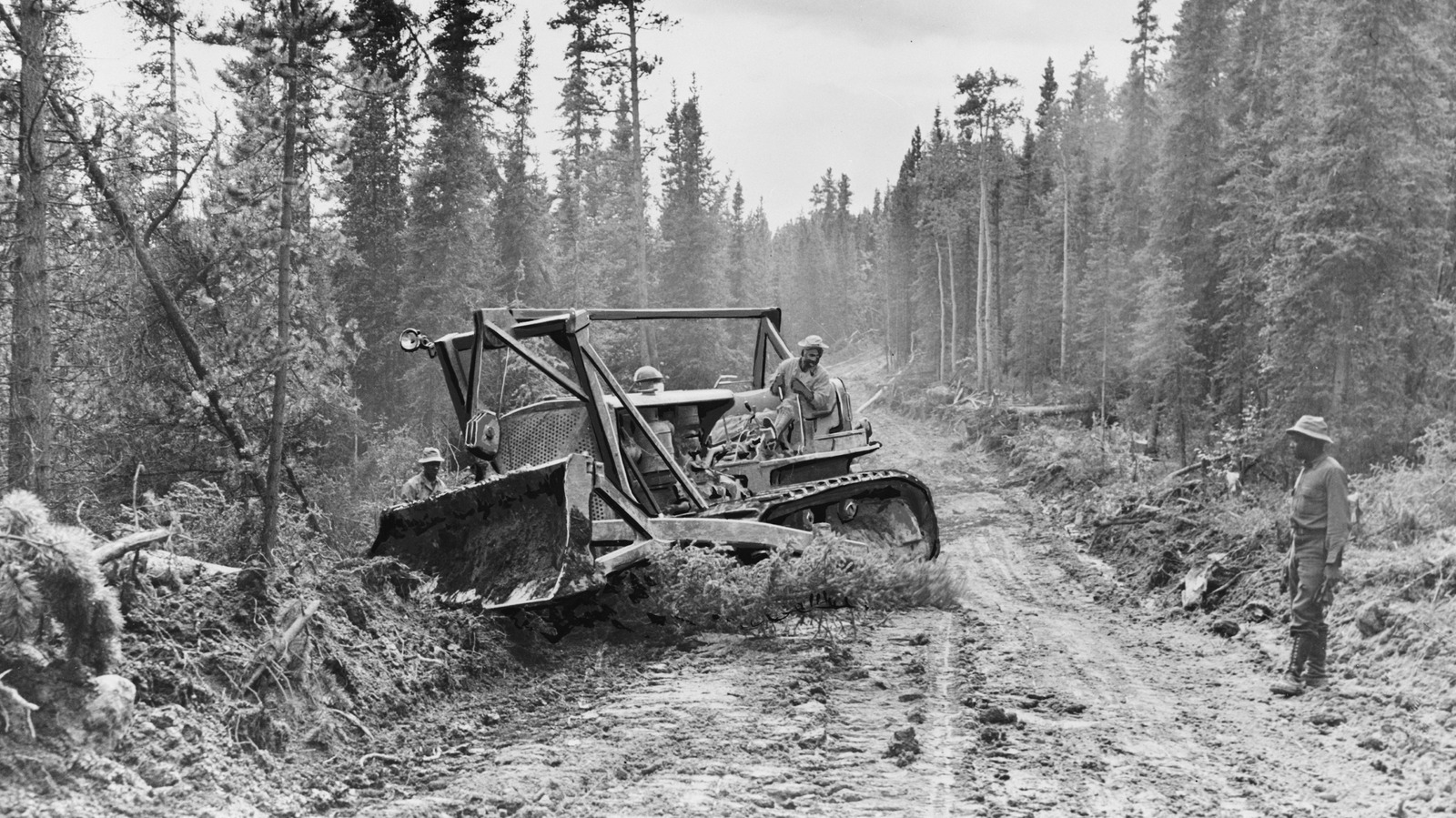
The Alaska Highway stands out as one of the most demanding road projects of its era. Also known as the Alaska-Canada Highway or the Alcan Highway, the route runs from Delta Junction, Alaska, through the Yukon and on to Dawson Creek, British Columbia.
According to the account, the road was built across roughly 1,500 miles of wilderness in just eight months in 1942. That finish time sounds remarkably fast, but the work itself was far from easy, with progress described as slow and arduous for much of the project.
A trimmed reference to the 1944 Canadian government film "Pincers on Japan" points to the brutal conditions crews faced, especially severe cold. The weather and remote terrain made the construction effort especially punishing, even as the overall schedule moved at an unusually rapid pace.
The result was a highway that crossed vast northern landscapes and connected key points in Alaska and western Canada. Its legacy is tied not just to the road itself, but to the scale of the challenge involved in carving a route through wilderness under harsh 1942 conditions.