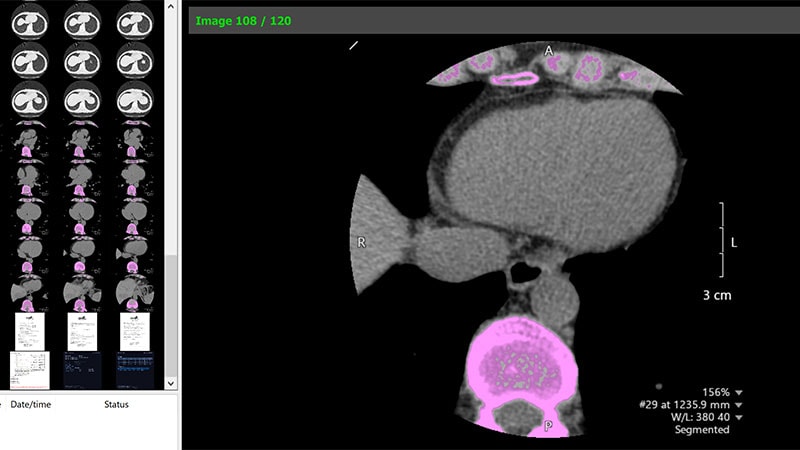
Coronary artery calcium scoring may give doctors a clearer picture of heart risk when standard assessments leave uncertainty about whether statin treatment is needed. The approach adds imaging-based information to traditional risk estimates for atherosclerotic cardiovascular disease, or ASCVD.
According to the report, adding CAC scoring helped separate adults into groups with lower and higher chances of future cardiovascular events. That kind of refinement matters most in prevention decisions, where a patient may not clearly fall into a category that strongly supports starting or delaying cholesterol-lowering medication.
The findings suggest CAC scoring could be especially useful as a tie-breaker in borderline cases. Rather than relying only on age, cholesterol levels, blood pressure, and other common factors, clinicians may use the calcium score to better judge whether risk is high enough to justify statin therapy.
Overall, the evidence points to coronary artery calcium scoring as a practical tool for more personalized heart prevention planning. It does not replace broader cardiovascular evaluation, but it may improve decision-making when the next step on statins is not obvious.