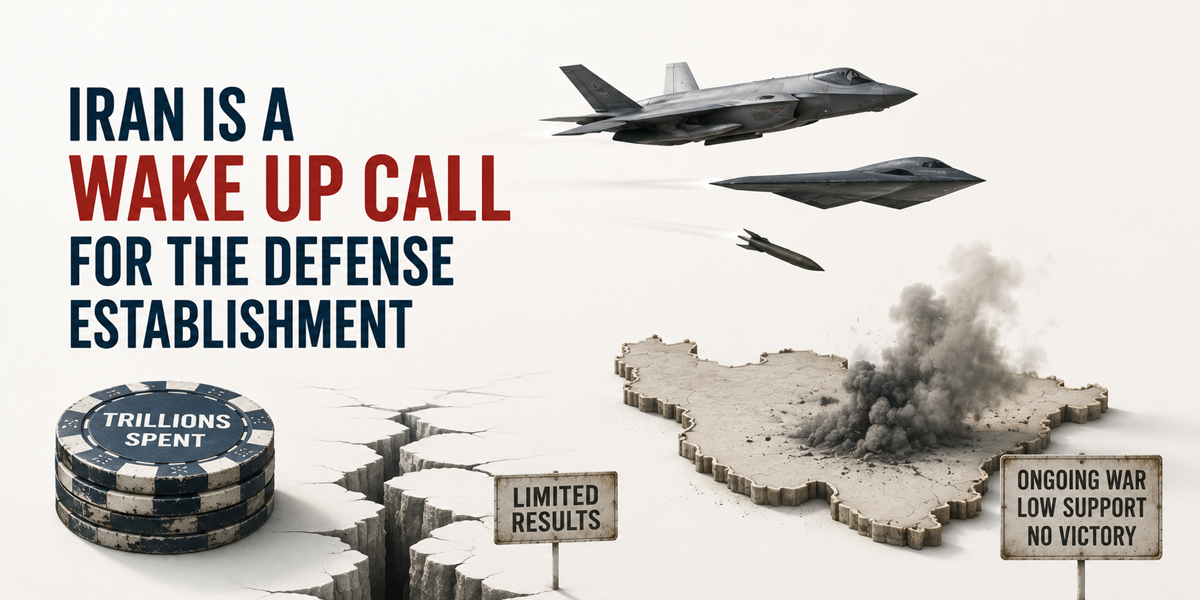
As the war in Iran enters its fifth month, the conflict is being presented as a broader warning for the US defense establishment. The central argument is that the campaign has failed to show meaningful progress while opposition to it continues to grow, raising fresh questions about the thinking behind the war.
The criticism is not limited to President Donald Trump, even though he is described as carrying significant responsibility for the current situation. The article’s larger point is that the approach being used did not begin with one administration. Instead, it is portrayed as part of an older national security playbook that has shaped US military policy since the Cold War.
In that view, the Iran conflict exposes deeper institutional habits inside Washington, especially the tendency to rely on military action without clear evidence that it can deliver lasting political results. A war that drags on for months without visible gains is presented as a sign that these assumptions may be failing again.
The piece frames Iran as a wake-up call because the backlash is mounting even as progress remains elusive. Rather than treating the war as an isolated mistake, it argues that the conflict should force a wider reexamination of how the US defense establishment plans, justifies and sustains military interventions.