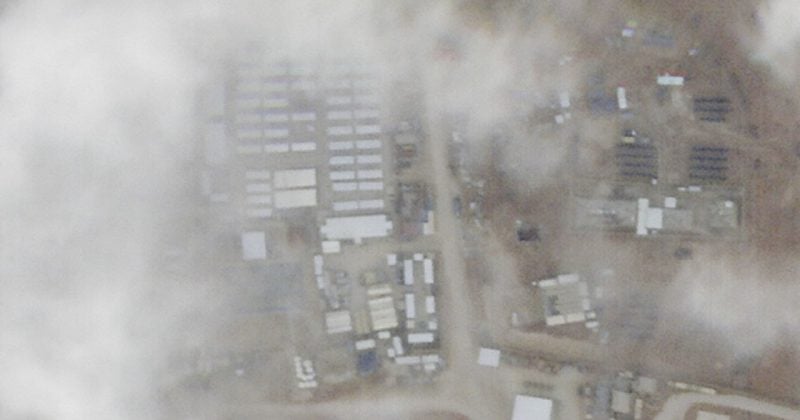
Iran's Revolutionary Guard has claimed it carried out missile strikes on the US-linked al-Azraq Air Base in Jordan, describing the operation as a successful hit on military assets. Jordanian and US officials, however, have challenged the reported scale of the damage, leaving the immediate impact unclear.
Even with disputed battlefield details, the episode has added another layer of uncertainty to financial markets already sensitive to conflict in the Middle East. When military tensions rise around key regional players and US forces, investors often move quickly to reprice geopolitical risk across equities, commodities, currencies, and digital assets.
Crypto markets are especially vulnerable to sudden shifts in sentiment because they trade around the clock and tend to react quickly to global headlines. In moments like this, traders often watch for sharp moves driven by fear, reduced risk appetite, or a temporary flight into perceived safe-haven assets outside more speculative corners of the market.
The reported strike claim and the conflicting official responses highlight how fast-moving regional confrontations can ripple far beyond the battlefield. For global investors, the central issue is not only what happened at the Jordan base, but how sustained Middle East escalation could affect market volatility, risk pricing, and confidence across traditional and digital assets.