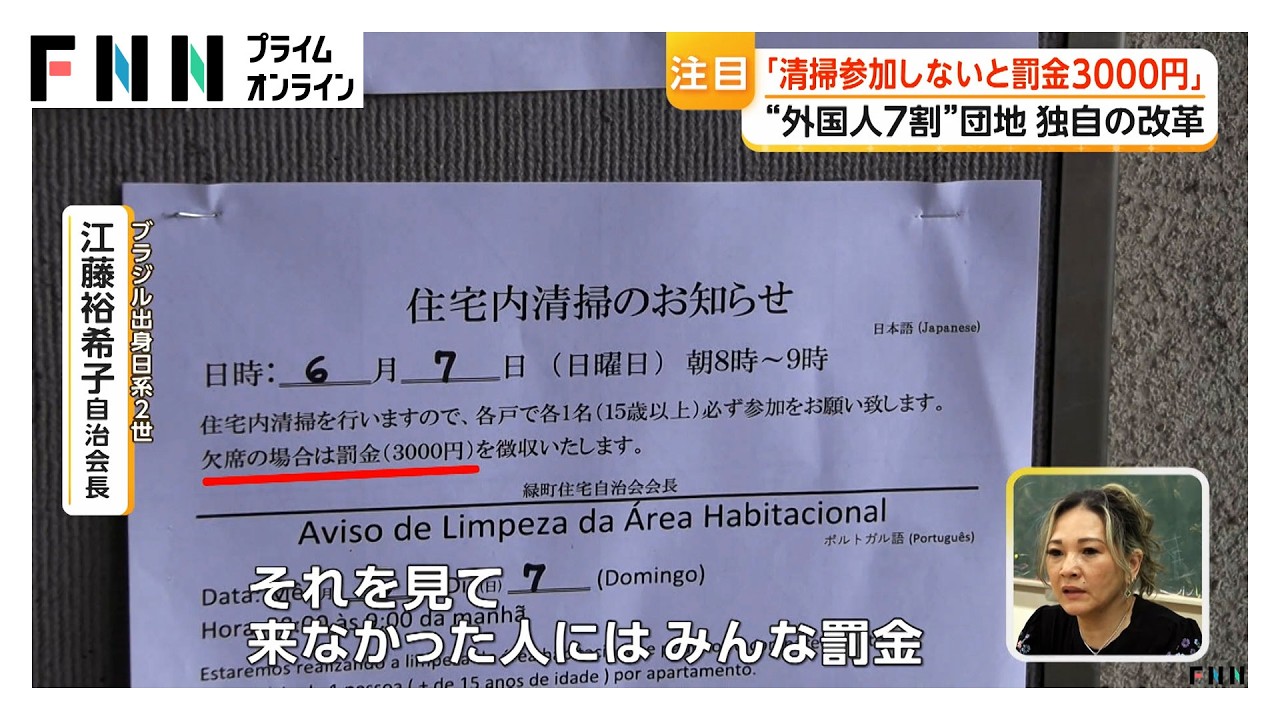
A public housing complex in Aichi Prefecture, where roughly 70% of households are occupied by foreign residents, is reportedly showing improvement after adopting a new community management approach. The measures combine multilingual communication, neighborhood activities led by foreign residents, and a 3,000-yen fine system aimed at discouraging rule-breaking.
The effort appears to address problems that can grow in large residential communities when language barriers make it harder to share expectations about daily life. By providing information in multiple languages, local organizers and housing managers are working to make rules easier to understand for residents from different backgrounds.
Another notable part of the response is the involvement of foreign residents in neighborhood activities. That approach suggests a shift away from relying only on top-down enforcement and toward encouraging participation from within the community itself. The added fine system gives the rules a clearer consequence when problems continue.
The reported improvements point to a broader lesson for public housing in Japan as neighborhoods become more diverse. Clear communication, resident involvement and consistent enforcement may help reduce friction and support better living conditions in shared housing environments.