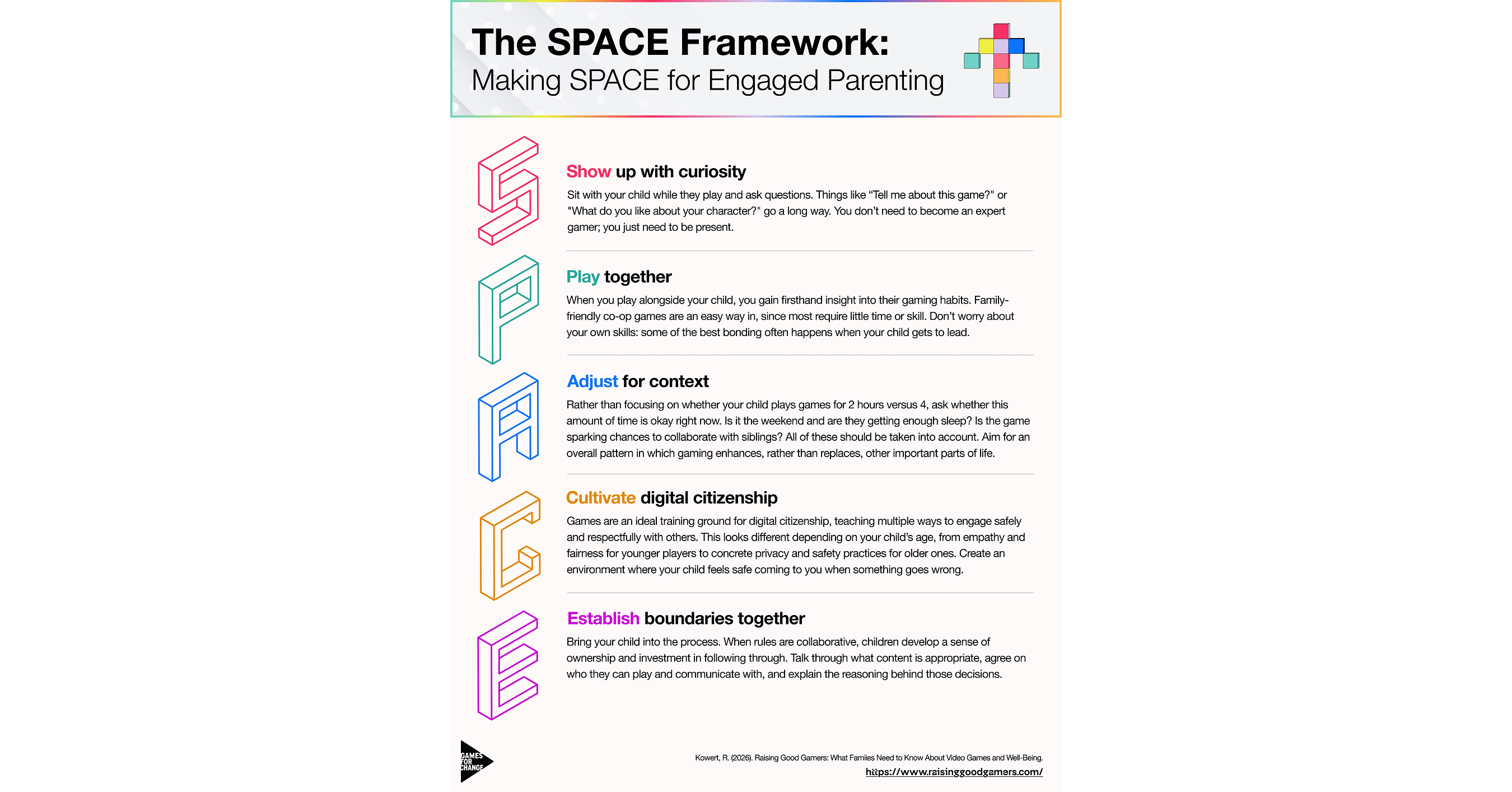
A new white paper from Games for Change argues that healthier video gaming at home may begin with asking better questions about how families actually use games. The report highlights a disconnect between broad public narratives around gaming and the day-to-day experiences many households say they are having.
Rather than framing video games only through concern or criticism, the paper points to a more practical discussion about family involvement. One of its clearest findings is that nearly 60% of children say they want their parents to take a more active role in their gaming lives.
That insight suggests that gaming at home is not only about screen time rules or general worries about technology. It is also about communication, shared understanding, and how parents engage with what their children are playing. The white paper appears to position this gap as an opportunity for families to move beyond assumptions and toward more informed conversations.
Overall, the report adds to the debate over healthy gaming habits by focusing on lived experience instead of one-size-fits-all narratives. Its central message is that better questions about video games, family routines, and parent involvement could lead to more balanced and realistic approaches at home.